Omote, ura: a single origin
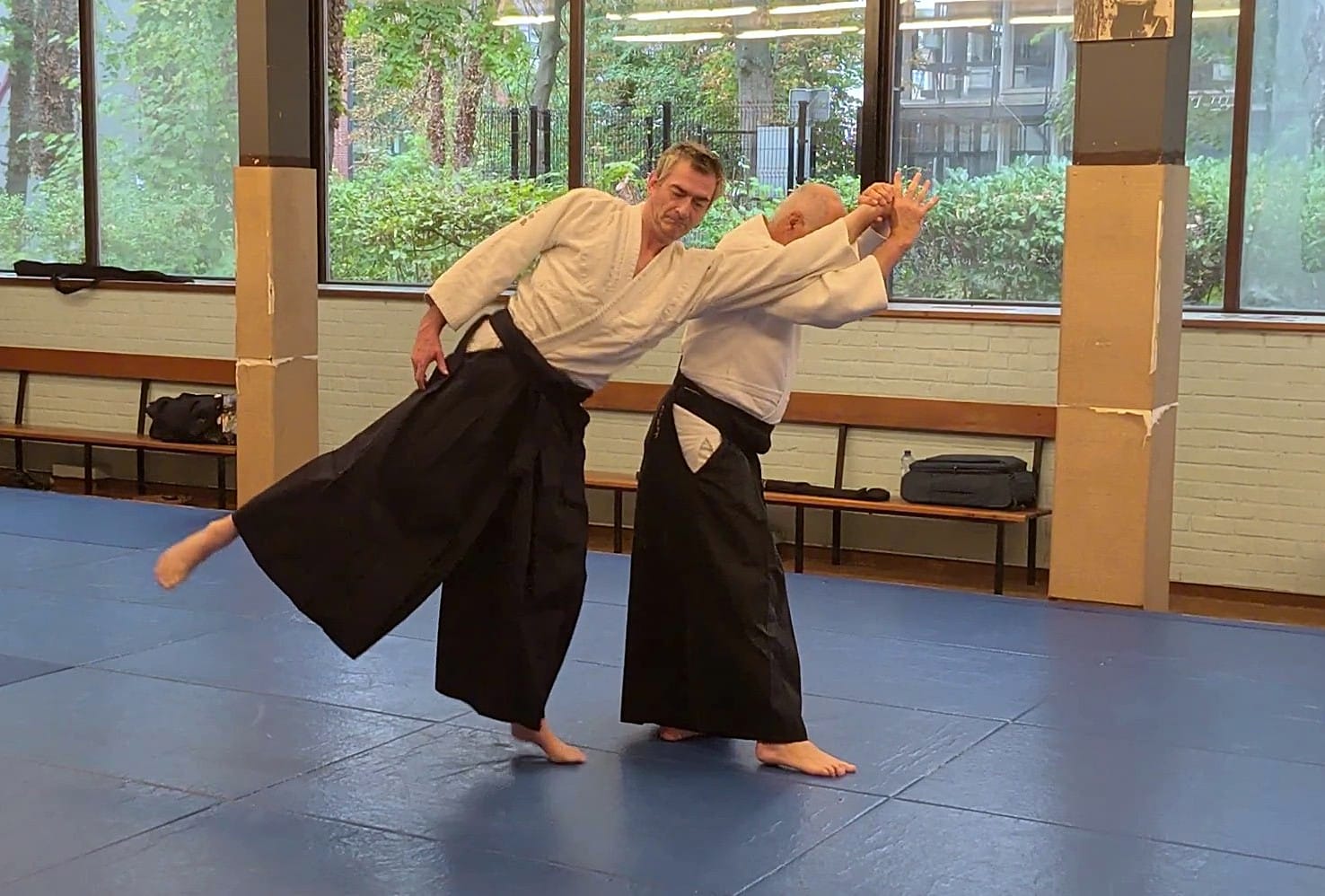
Omote and ura are not two different movements, independent of one another: the origin of omote, like that of ura, lies in the same initial pivot.

Omote and ura are not two different movements, independent of one another: the origin of omote, like that of ura, lies in the same initial pivot.
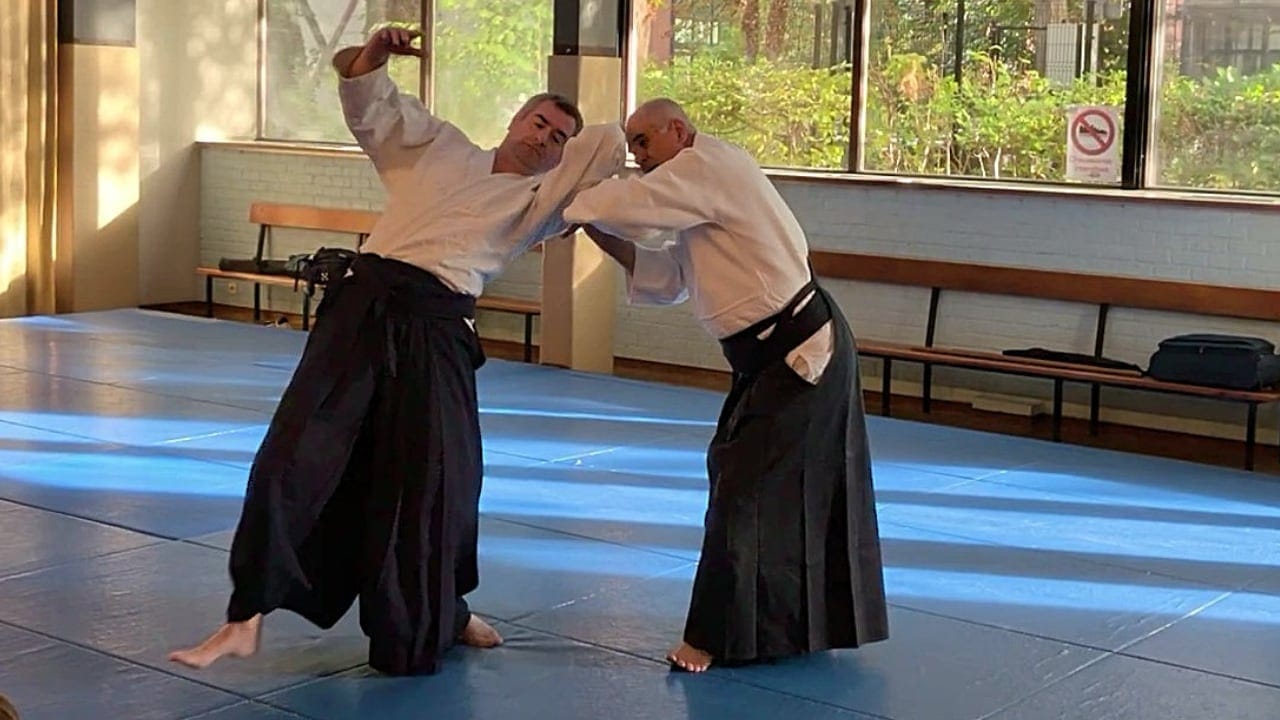
The 270° turn is absolutely essential for the correct execution of shiho nage. It is therefore necessary to know the method that allows one to turn 270° without lifting one’s feet off the ground.
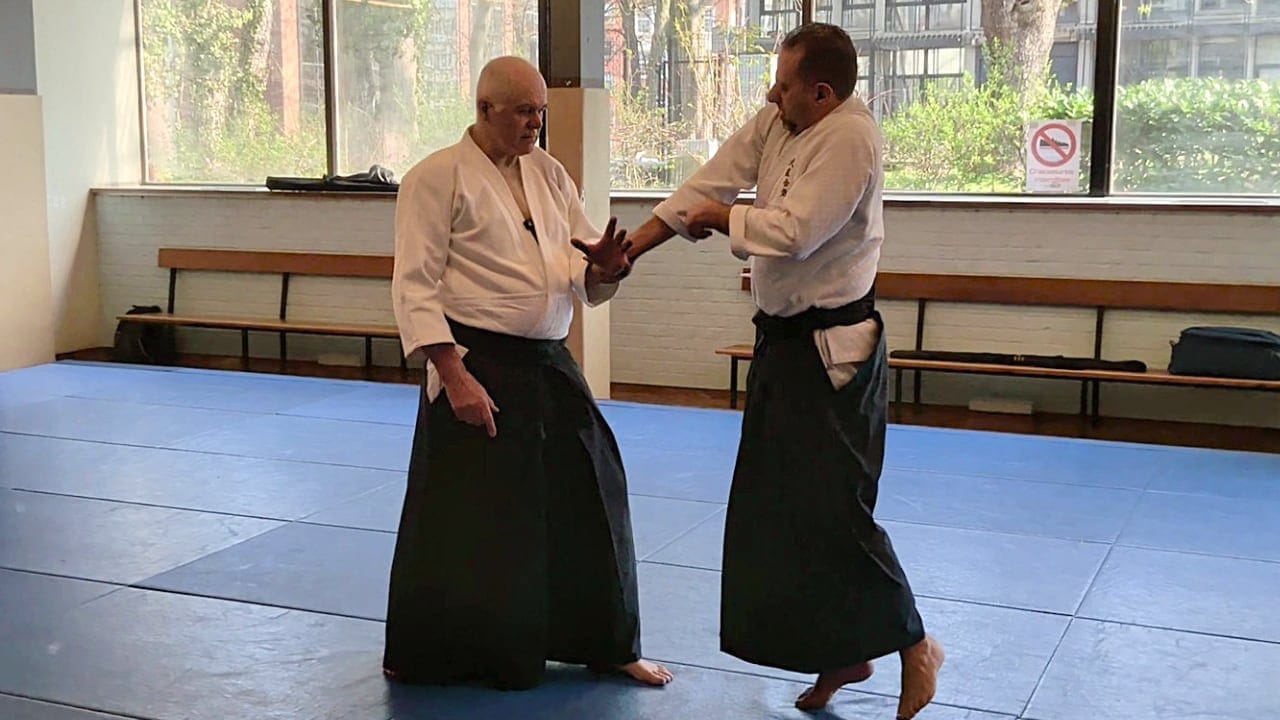
In the shiho nage technique, uke is kept off-balance towards the rear from the start to the end of the movement; at no point is he pulled forwards. This is the teaching given by O Sensei in Budō, with the utmost care and precision.
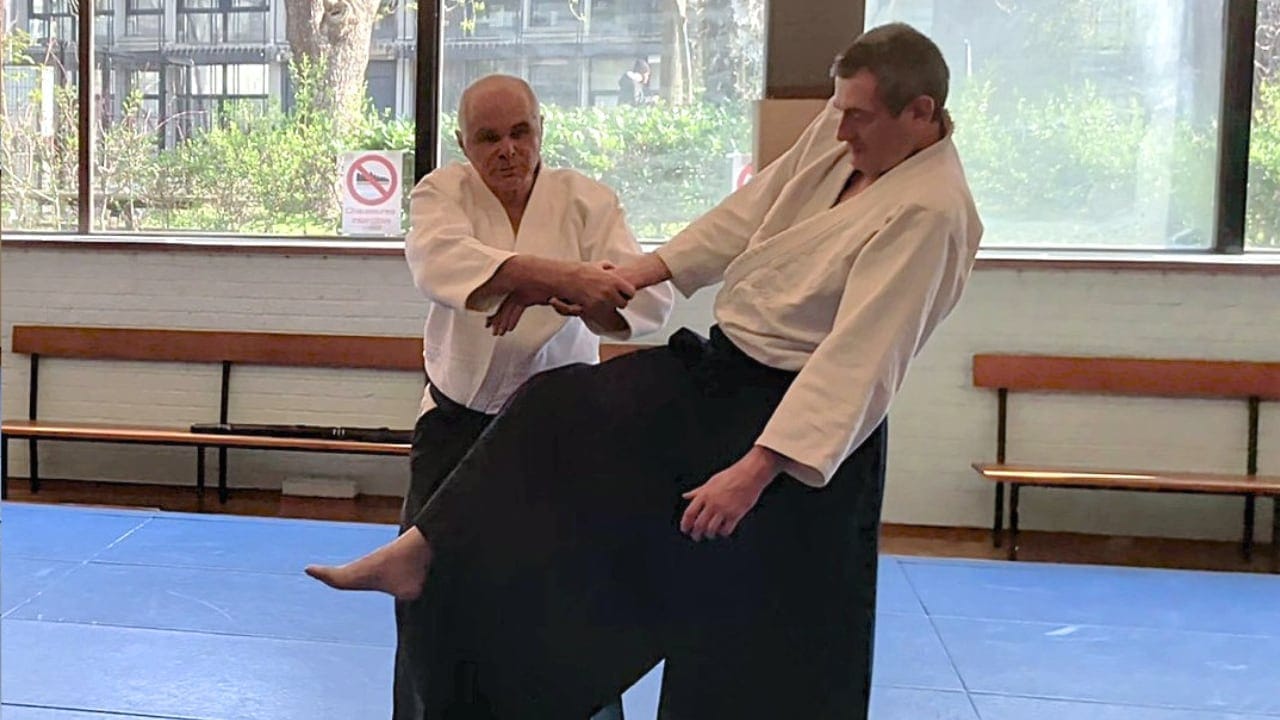
In Budō, O Sensei provides a particularly precise description of shiho nage, which states that the energy must be developed vertically, and which does not correspond to the way the technique is practised in the method.
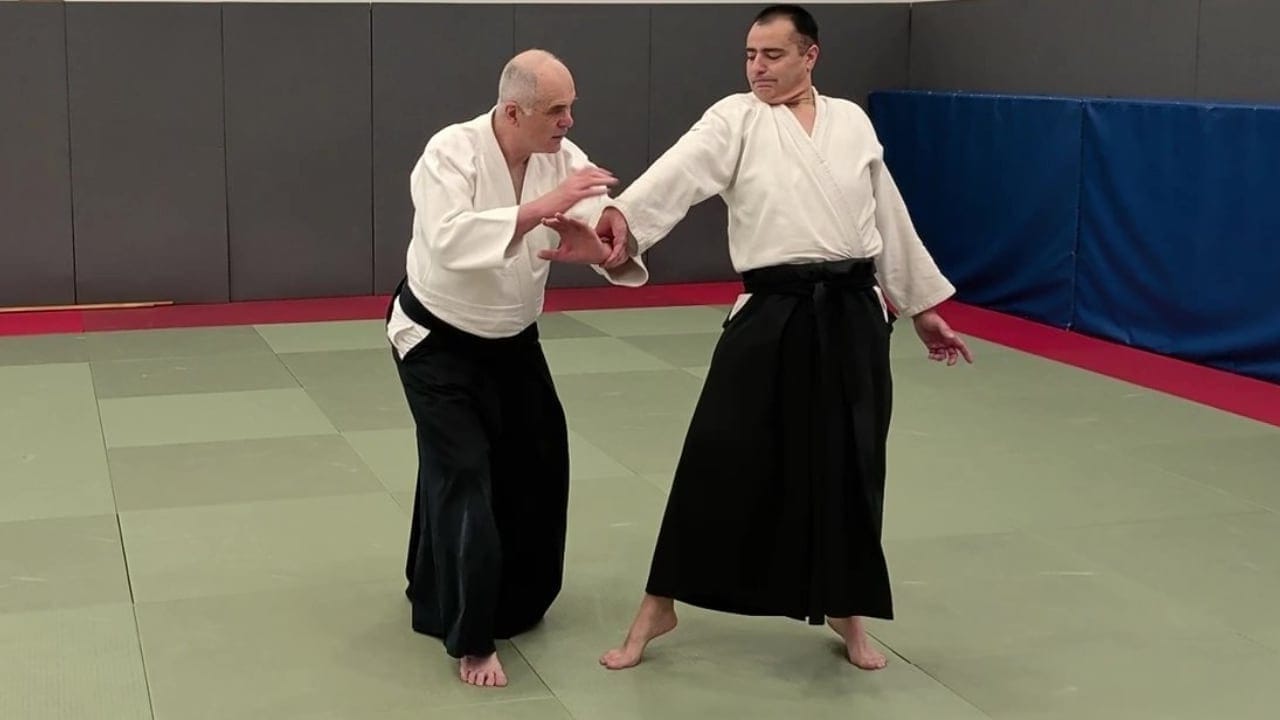
‘Concentrate force in the fingertips of the left hand to project the opponent’s right hand upwards towards his shoulder’ - O Sensei (Budō)
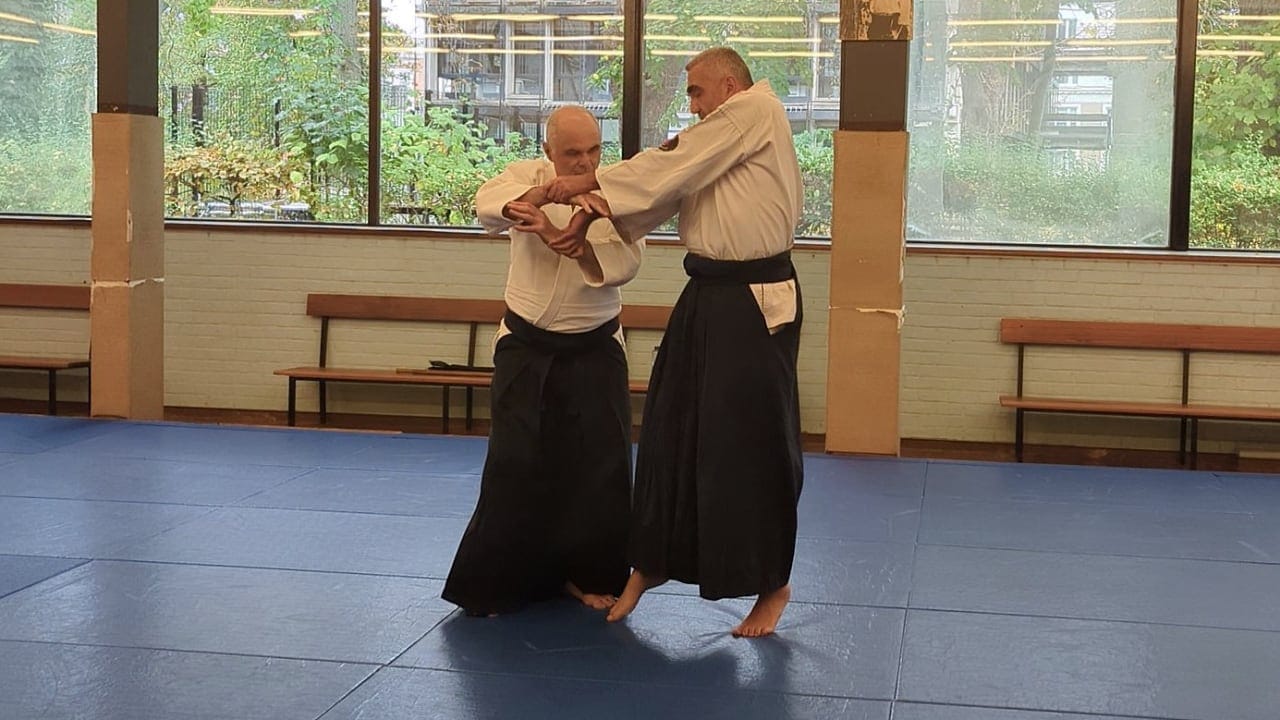
Tenchi, kokyu, kaiten, kaeshi, and shiho are technical principles present in every Aikido technique. Every Aikido technique must respect all of them in order for the unique principle of irimi in Aikido to be a reality.
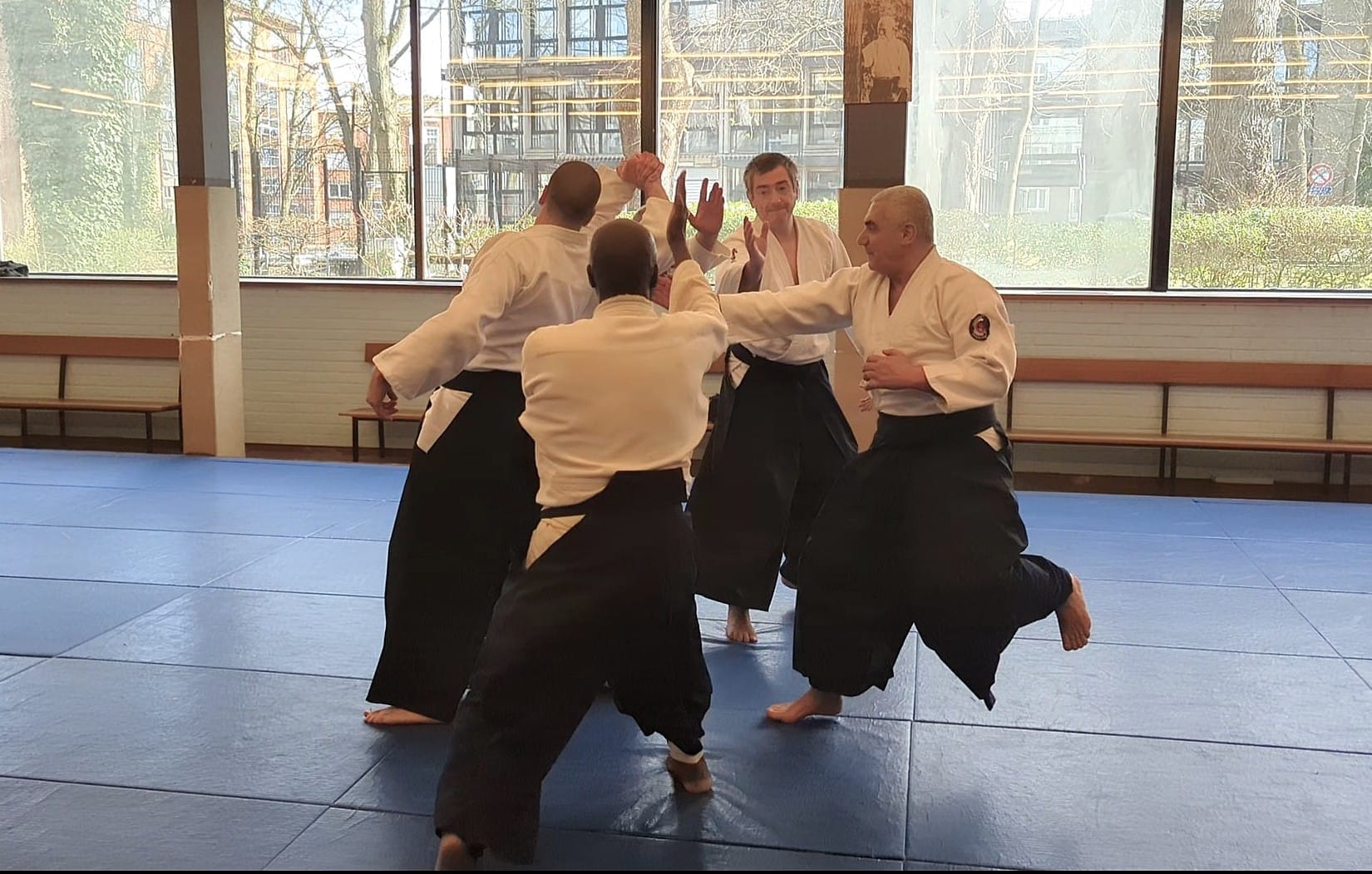
At the moment of attack, it is vital to choose one of the six directions (roppo) and move behind the attackers. Then, apply the first law 一法ヲ應用ス - O Sensei