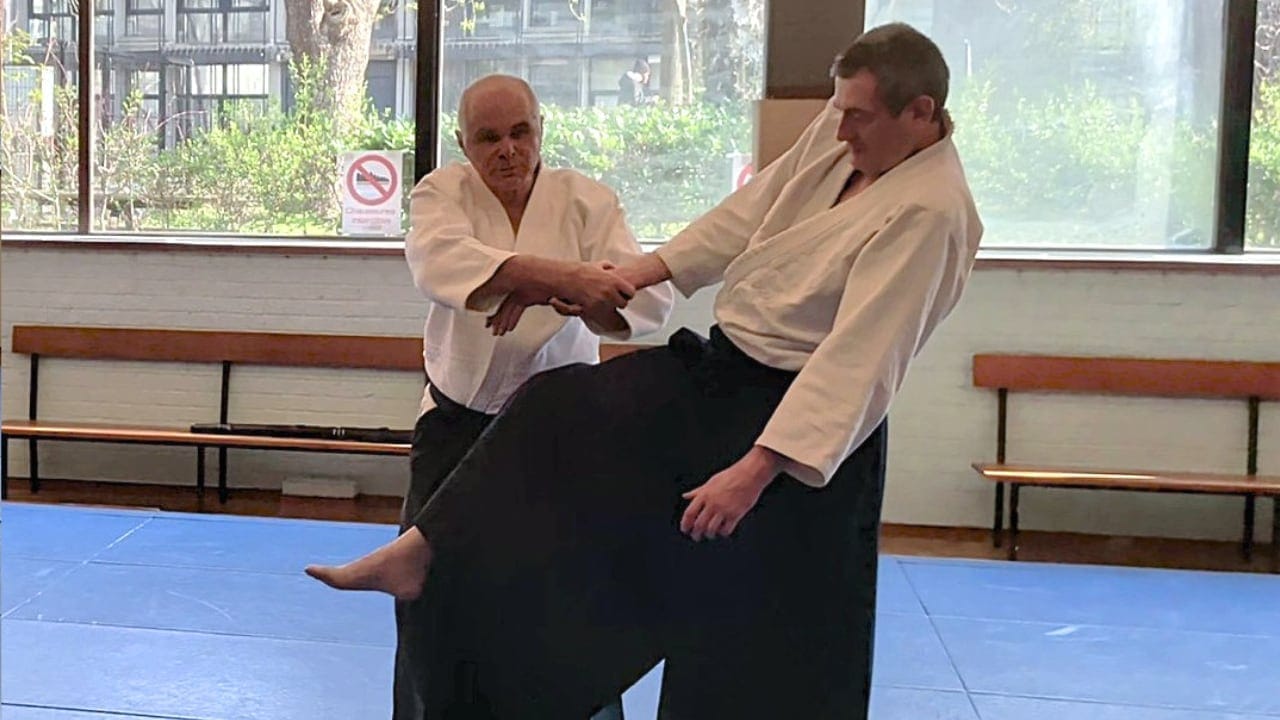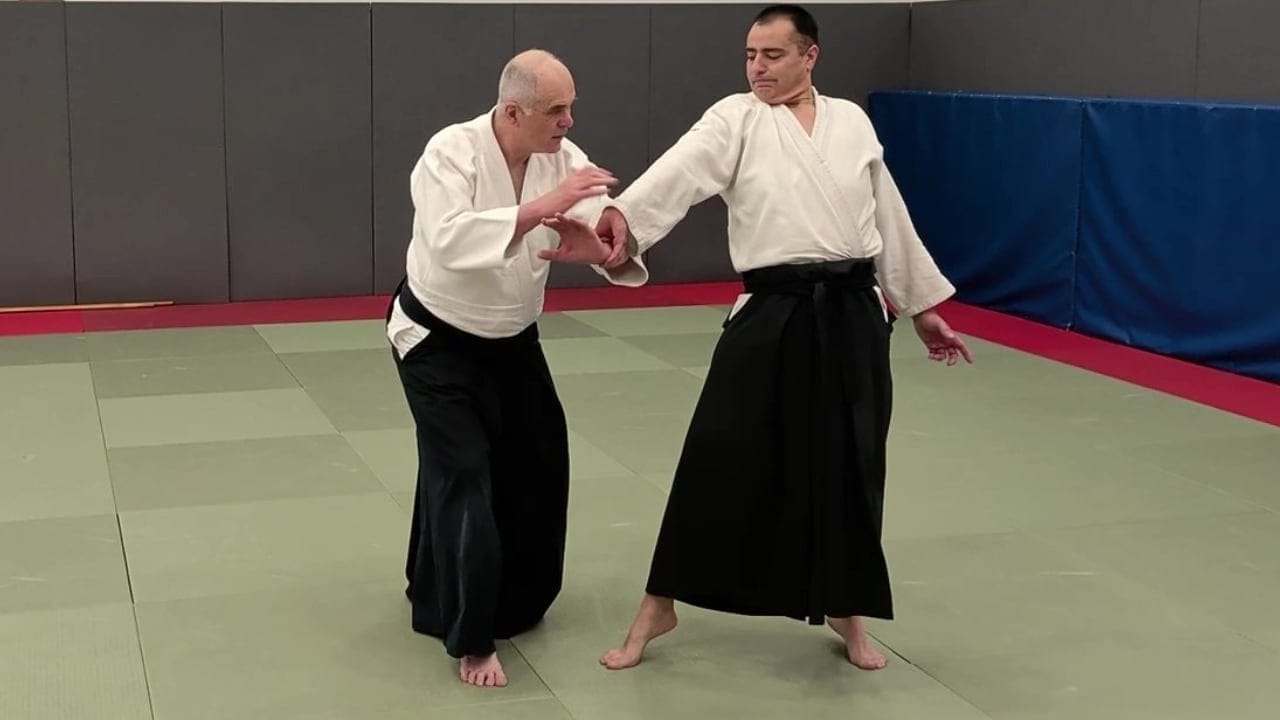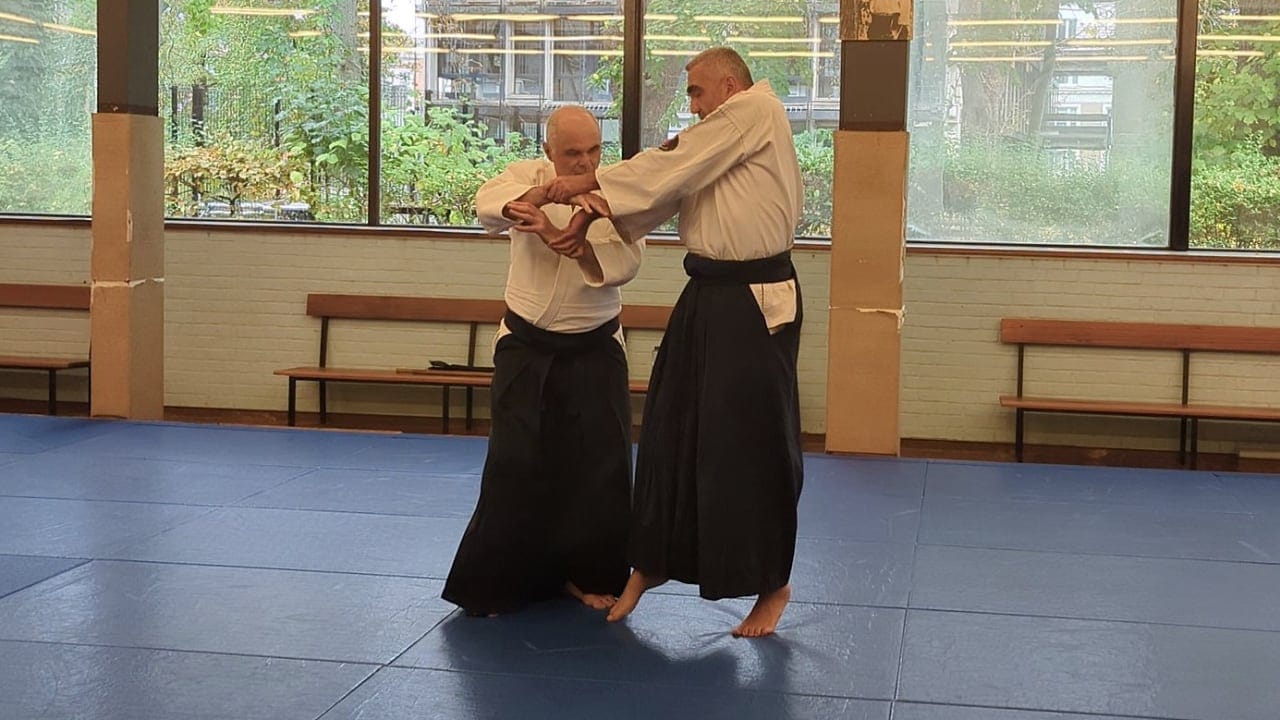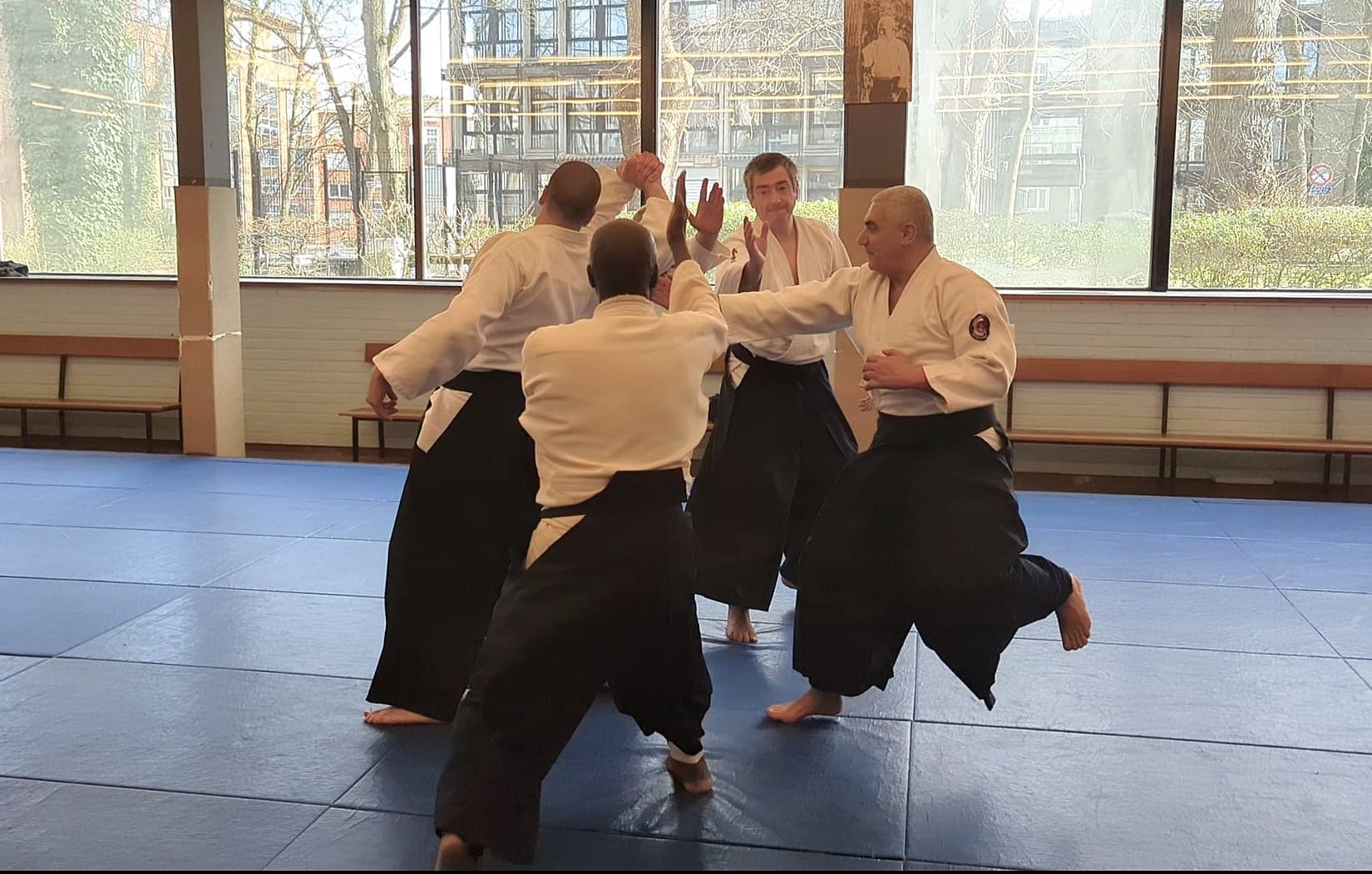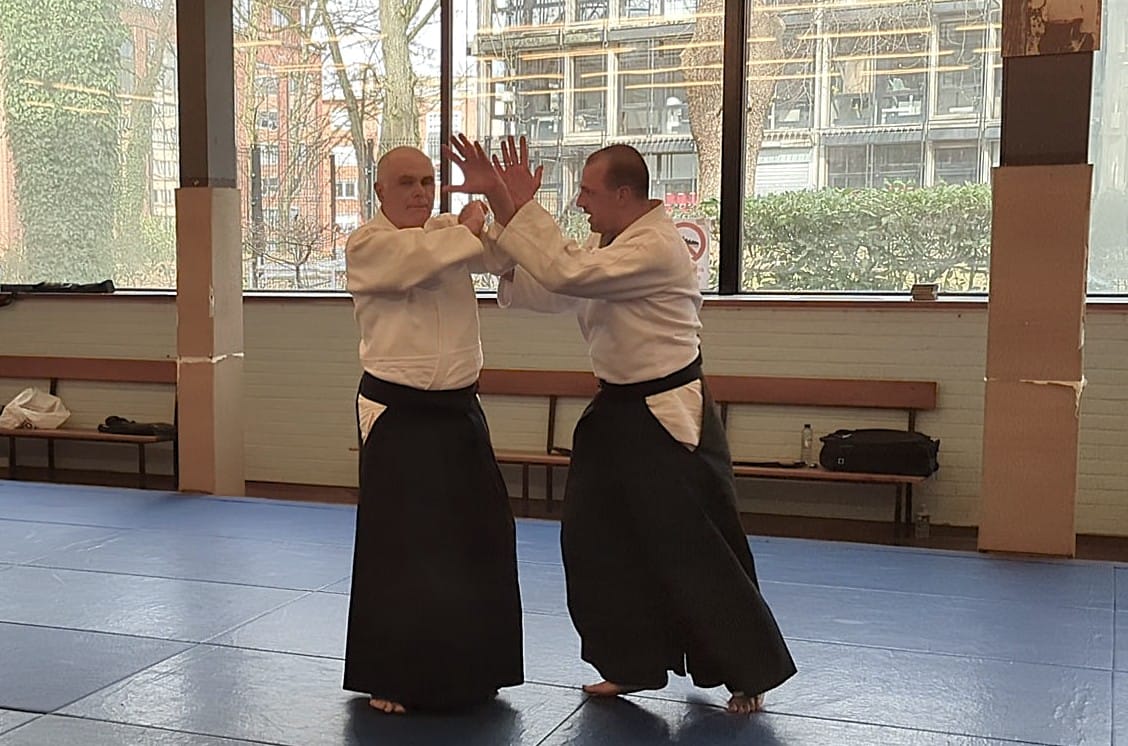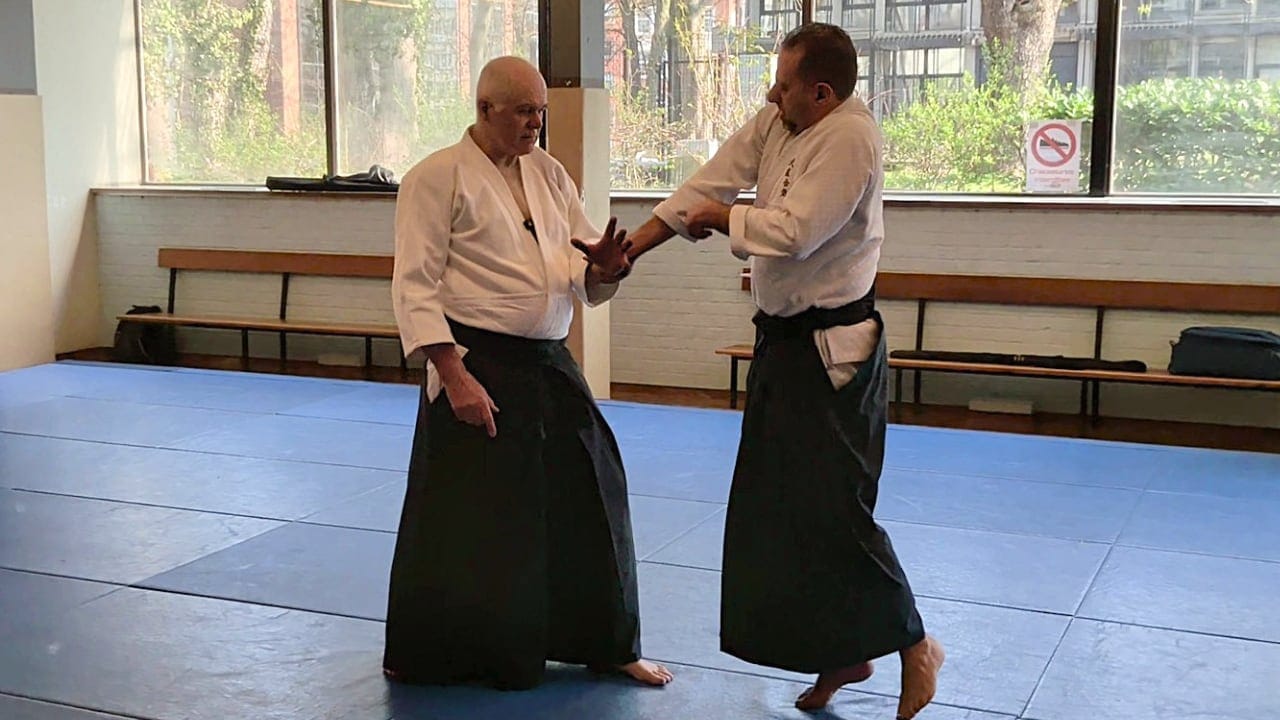
The first phase of the movement towards uke’s shoulder is an upward, purely vertical motion. The elbow, held close to the body, acts as the link between the supporting leg and the hand. It channels energy from the ground upwards. Uke is then "fixed" for a split second, pushed backwards and upwards:
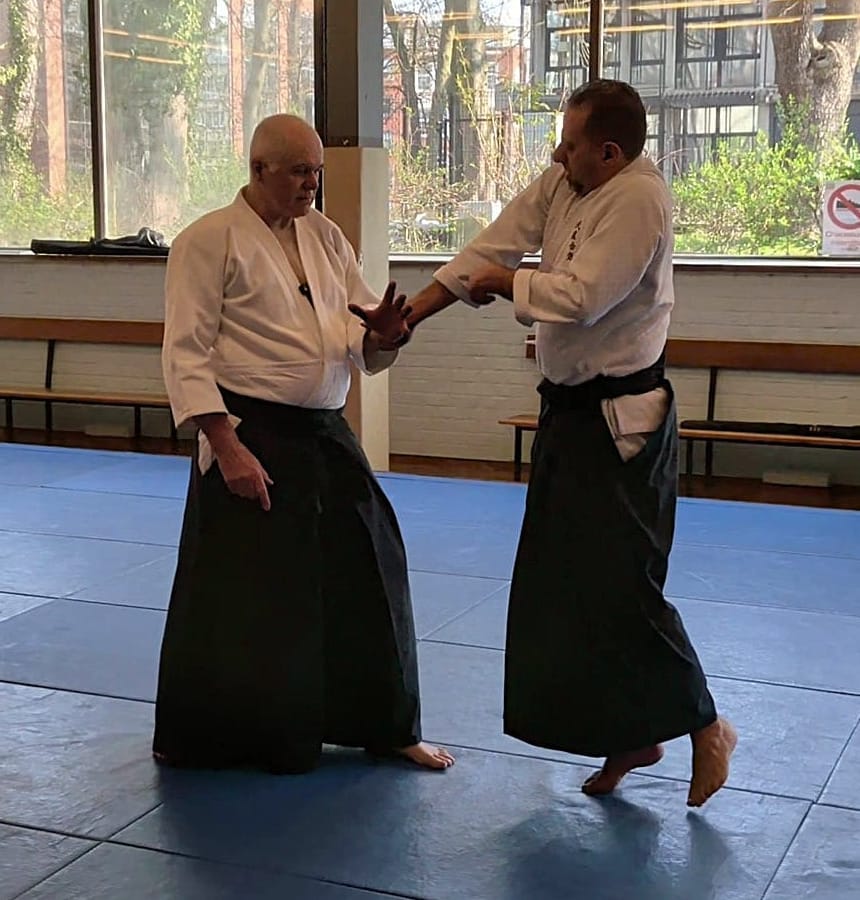
The inward rotation of the kote (hand/forearm) occurs only in the second phase of the movement. At the end of this rotation, tori secures control by grasping, with his free hand, the inner side of uke’s wrist, which naturally presents itself in front of him. The grip must be applied on the pulse.
This rotation of the kote causes uke – who is already off-balance backwards – to be thrown even further backwards, where he will come crashing down to the ground as tori pivots 180° and executes his shomen cut.
Important: Uke is kept off-balance backwards from the start to the end of the shiho nage movement; at no point is he pulled forwards.
The video shows the sequence of these two stages:
This is the teaching given by O Sensei in Budō, with the utmost care and precision. It is the way in which the Founder performed shiho nage until the end of his days, as demonstrated by the film shot at the Aikikai in 1958, which can be viewed in the previous section.
This method of performing shiho nage is what O Sensei calls "Training in Aiki", because it respects the mobilisation of energy along the vertical axis, from the earth to the sky, and then from the sky to the earth (ageru-sageru), in other words, Tenchi.