Omote, ura: a single origin
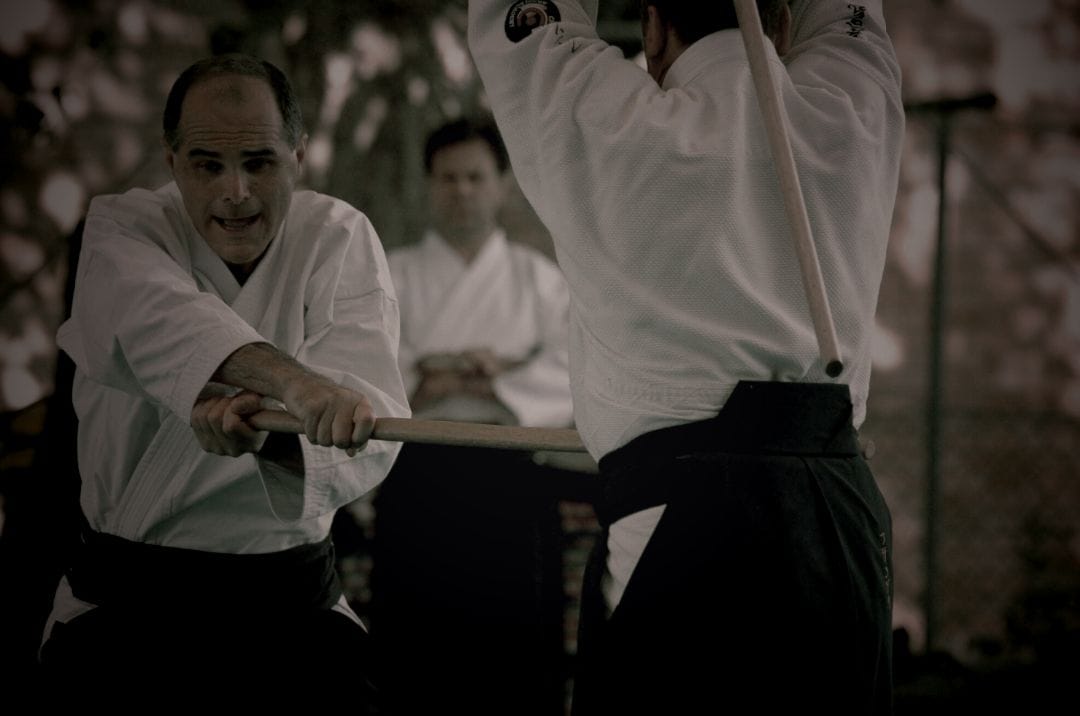
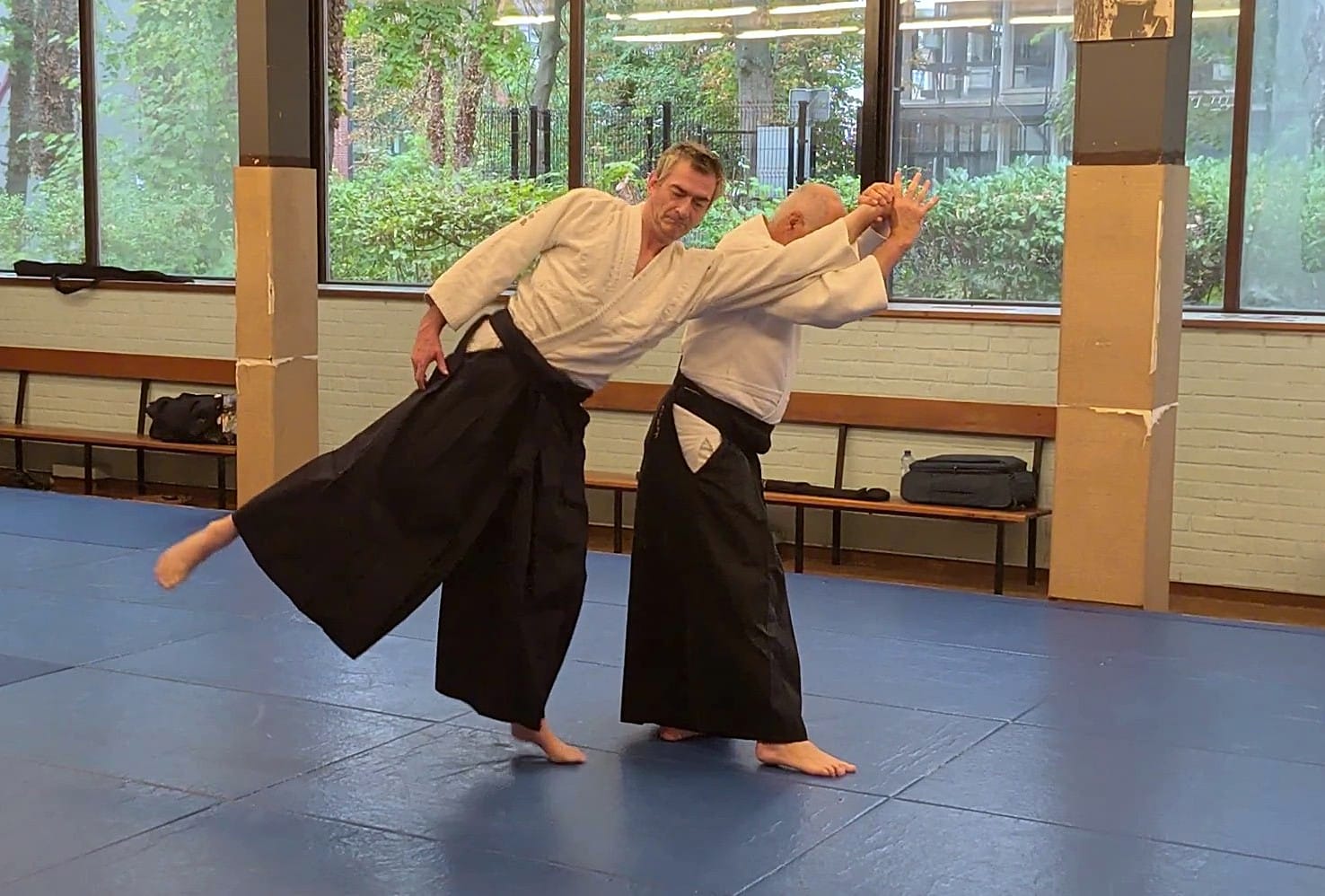
Omote and ura are not two different movements, independent of one another: the origin of omote, like that of ura, lies in the same initial pivot.

Omote and ura are not two different movements, independent of one another: the origin of omote, like that of ura, lies in the same initial pivot.
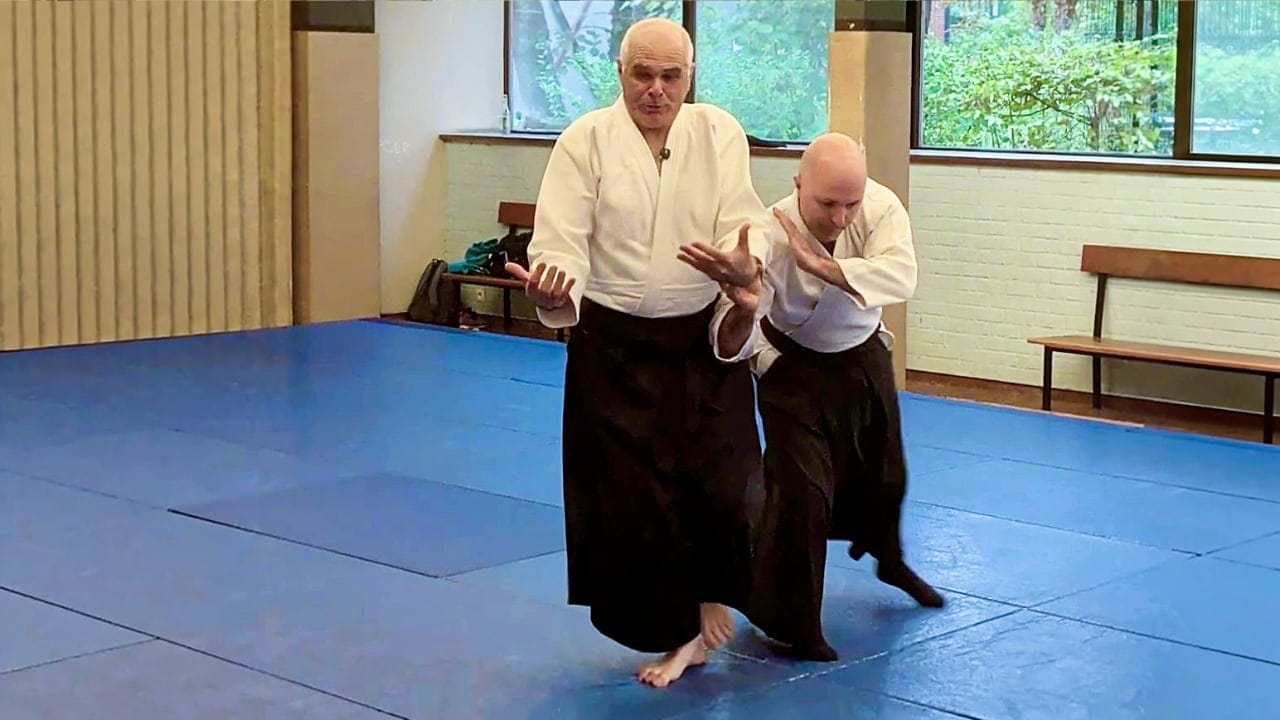
In Aikido, there is no movement before the pivot, because the pivot is the origin of Aikido movements. Yet nothing can come before the origin. Moving in any way before pivoting is therefore impossible in Aikido.
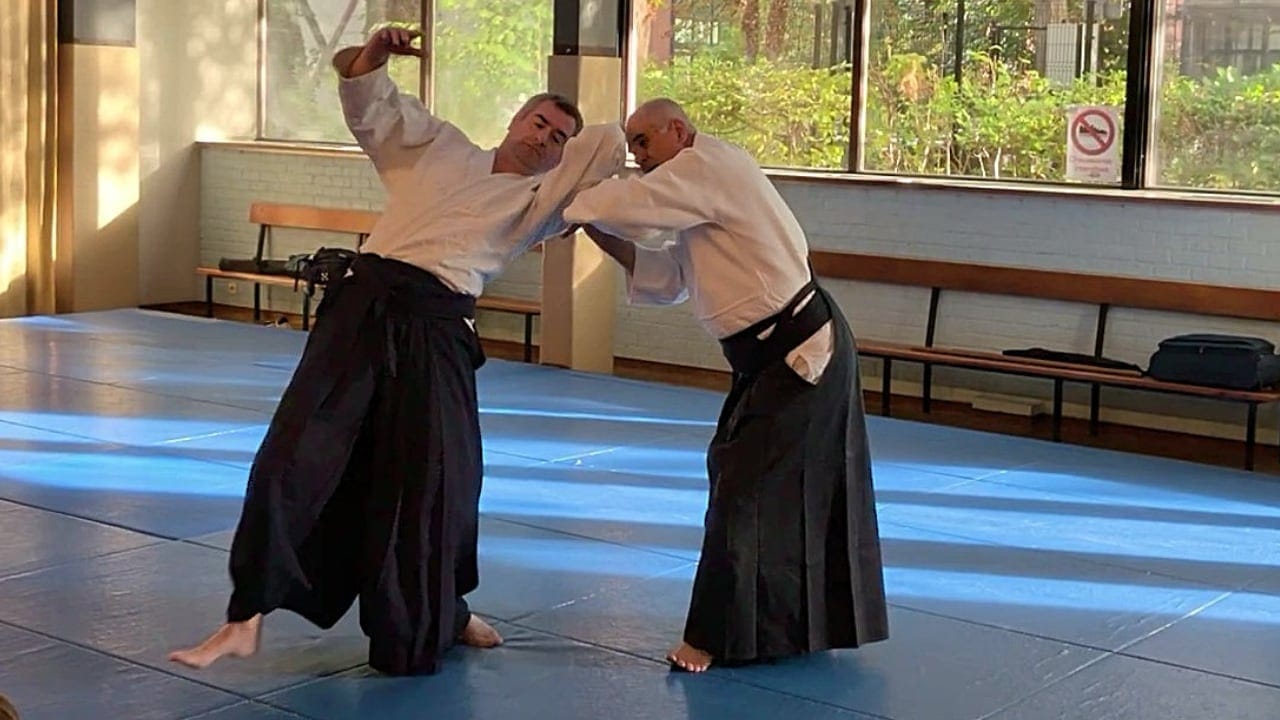
The 270° turn is absolutely essential for the correct execution of shiho nage. It is therefore necessary to know the method that allows one to turn 270° without lifting one’s feet off the ground.
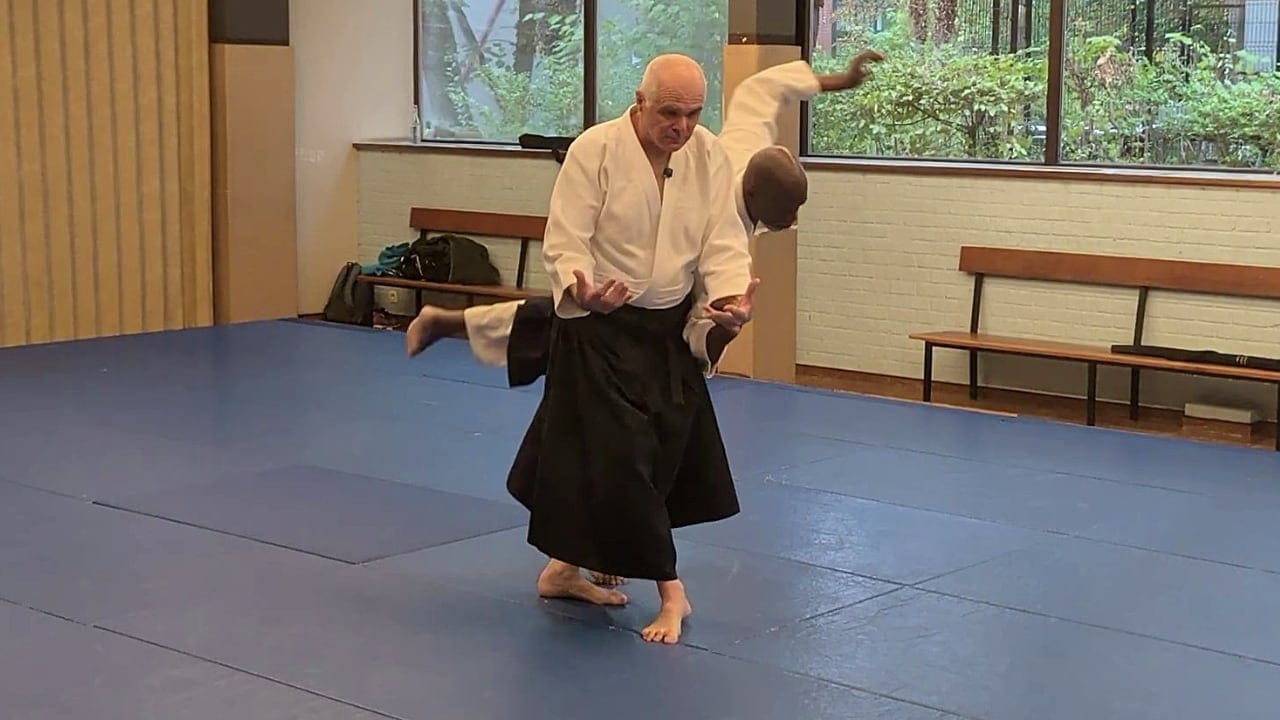
Tai no henka is not a 180° backward rotation around uke by means of a large step. Tai no henka is a 270° pivot without any step. The step comes afterwards, as an effect of tai no henka, as the consequence of the pivot.
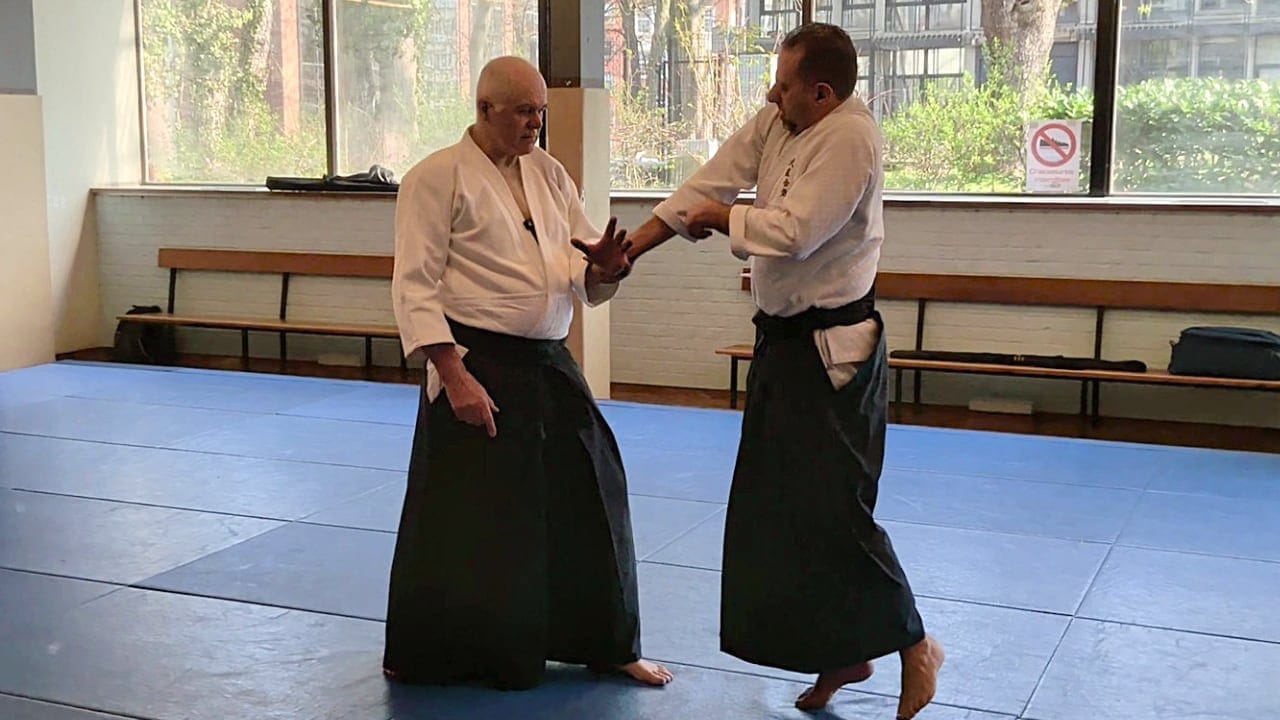
In the shiho nage technique, uke is kept off-balance towards the rear from the start to the end of the movement; at no point is he pulled forwards. This is the teaching given by O Sensei in Budō, with the utmost care and precision.
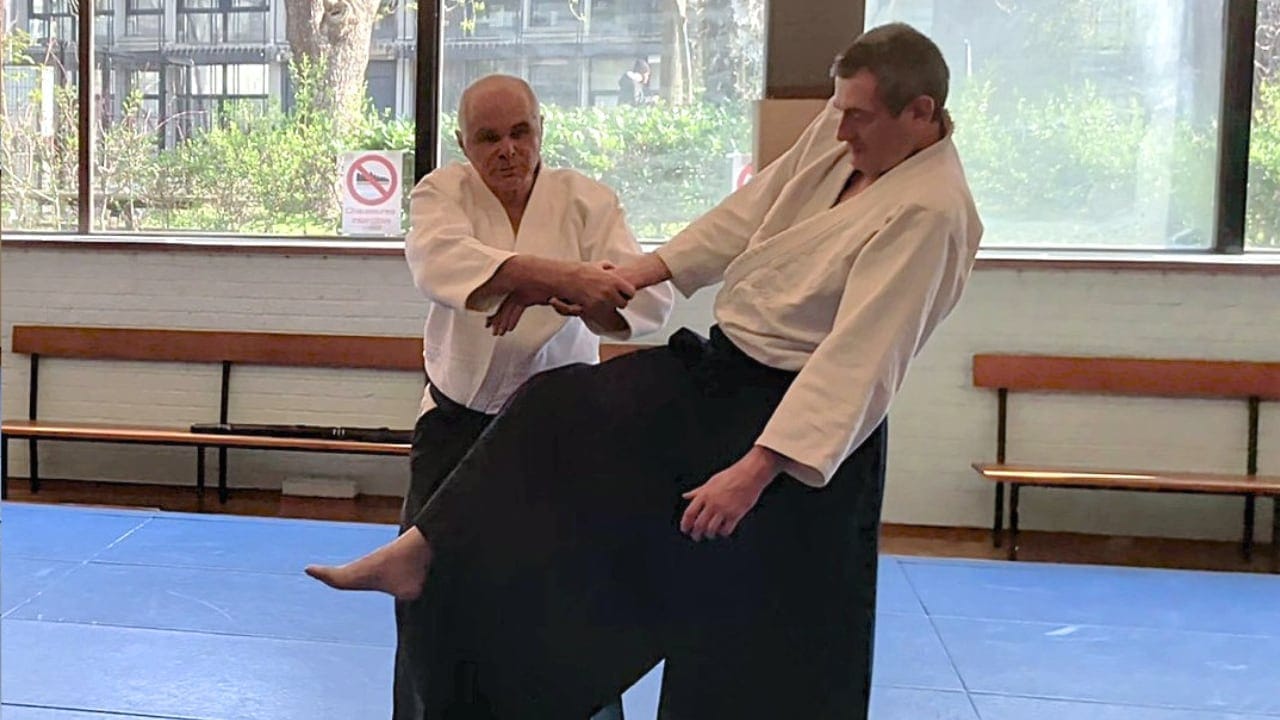
In Budō, O Sensei provides a particularly precise description of shiho nage, which states that the energy must be developed vertically, and which does not correspond to the way the technique is practised in the method.
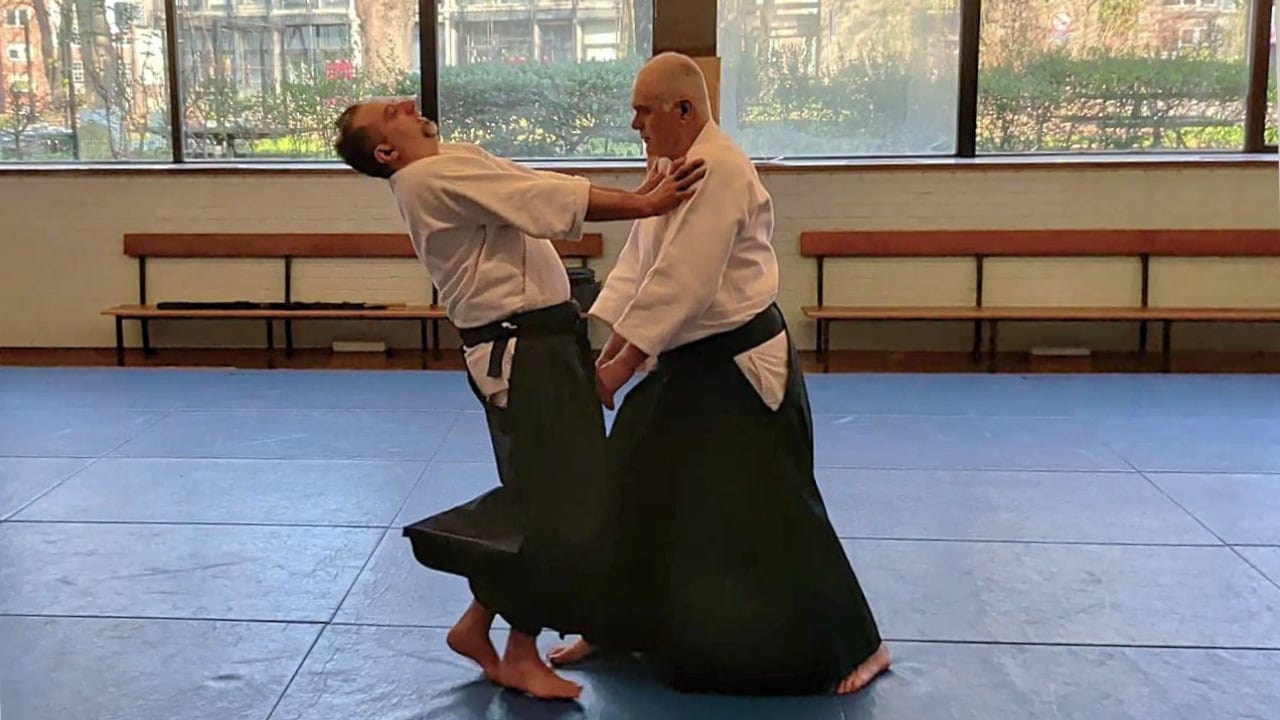
“When the opponent seeks to strike, one must first provoke in them that very desire to strike, then let them give themselves over to it.” - O Sensei Morihei Ueshiba, Budō, p5