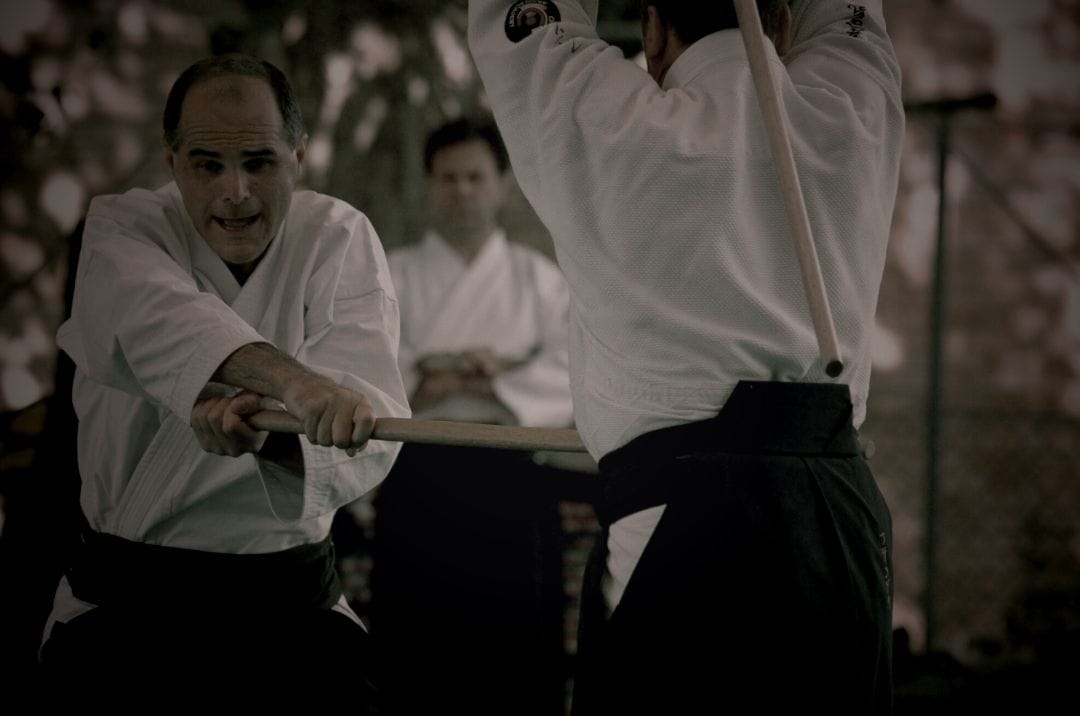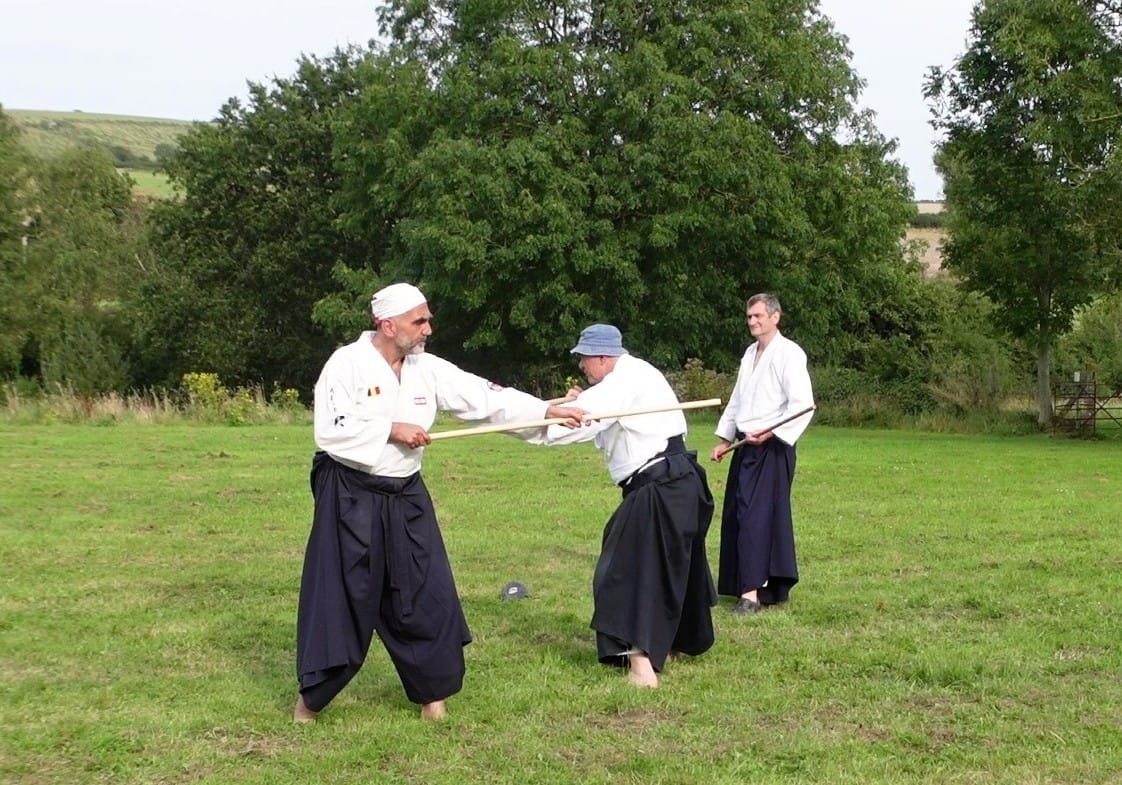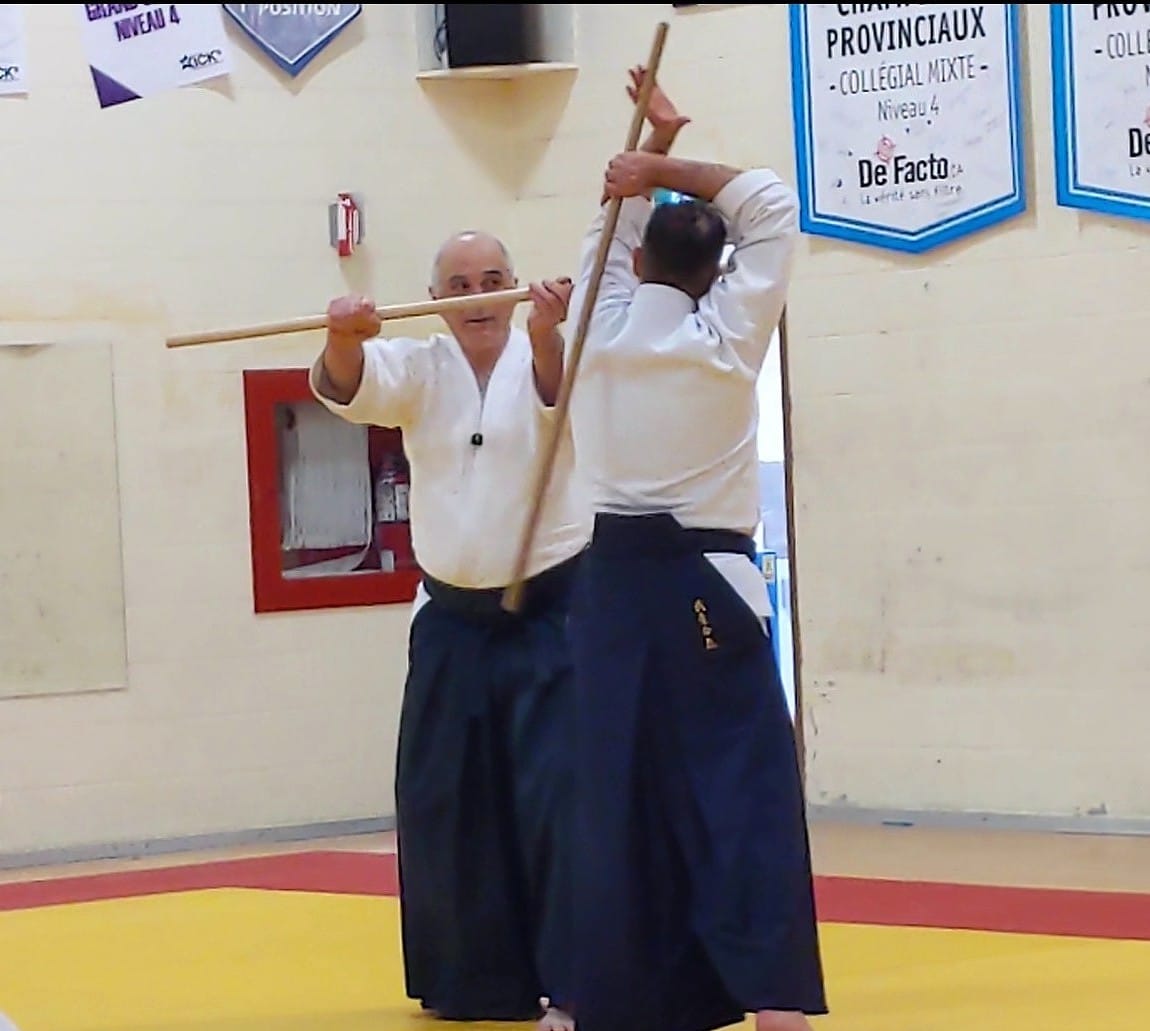
KUMIJO #6
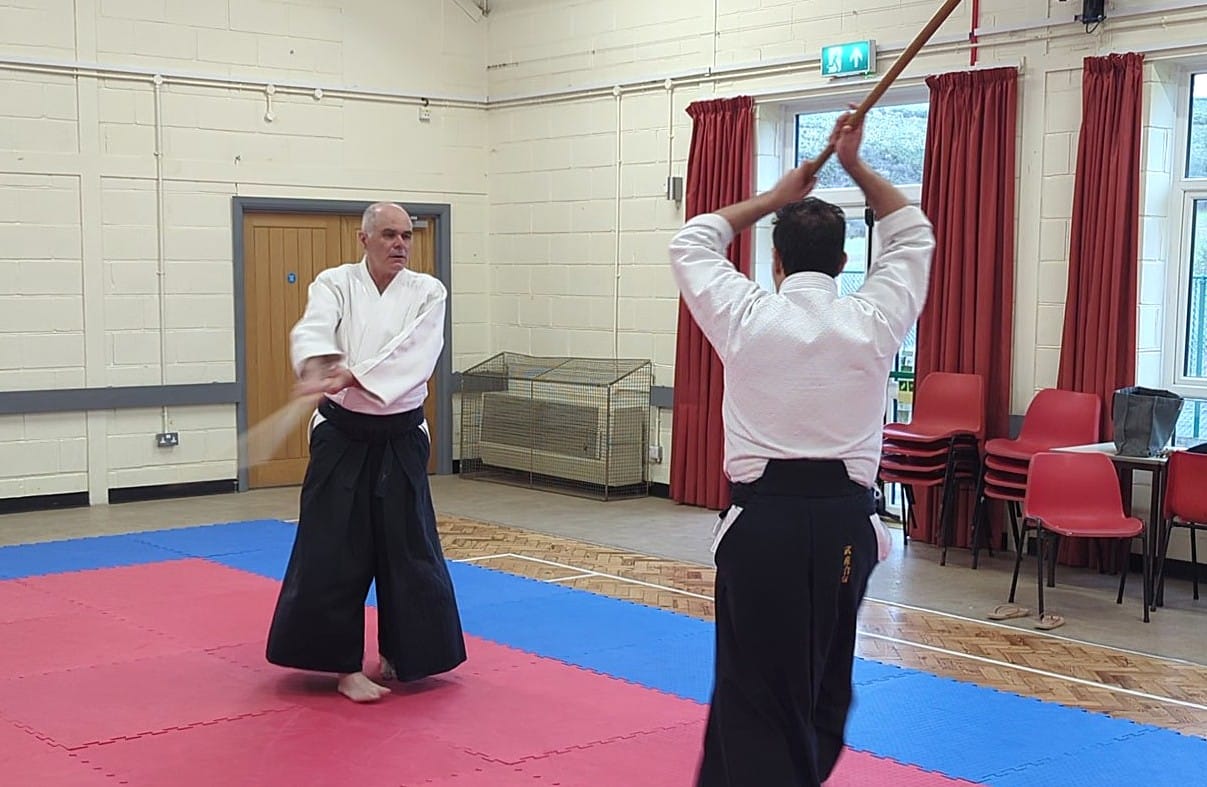
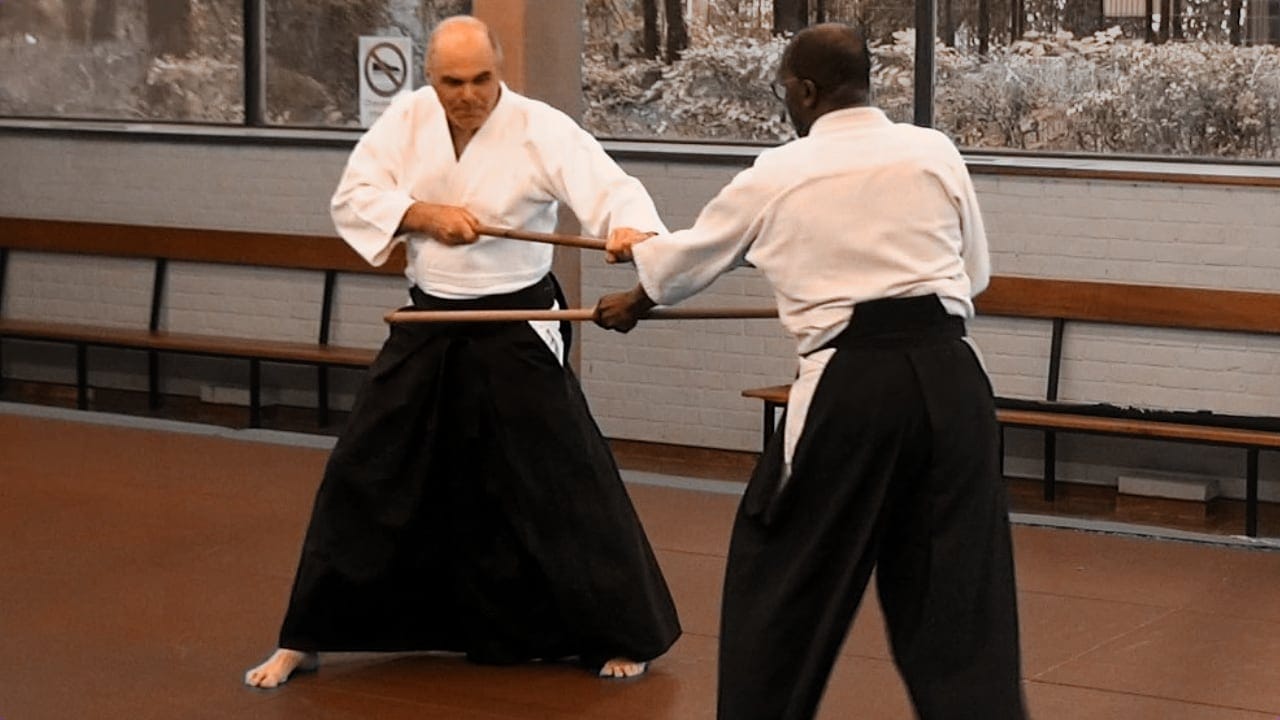
The exercise is based on the principle of awase: when uke jo is in control between uchi jo’s two wrists, uchi jo raises his jo once more to attack shomen. Uke jo then simply has to follow this movement.

The exercise is based on the principle of awase: when uke jo is in control between uchi jo’s two wrists, uchi jo raises his jo once more to attack shomen. Uke jo then simply has to follow this movement.
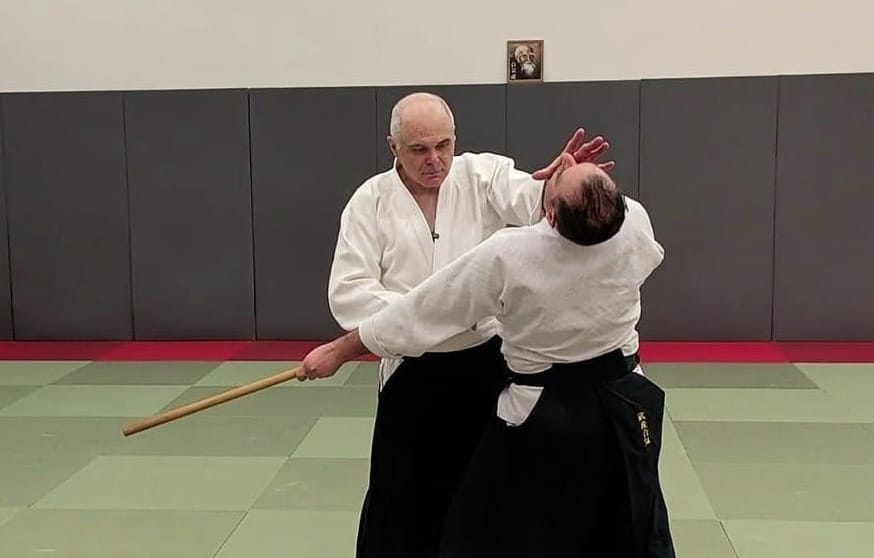
In Aikido, one moves up and down along a vertical axis, regardless of the technique.
There are several methods, and I think Morihiro Saito's is the best. But there's also Gozo Shioda's method and Koichi Tohei's method, which are interesting in many ways. And then there's the Aikikai method.
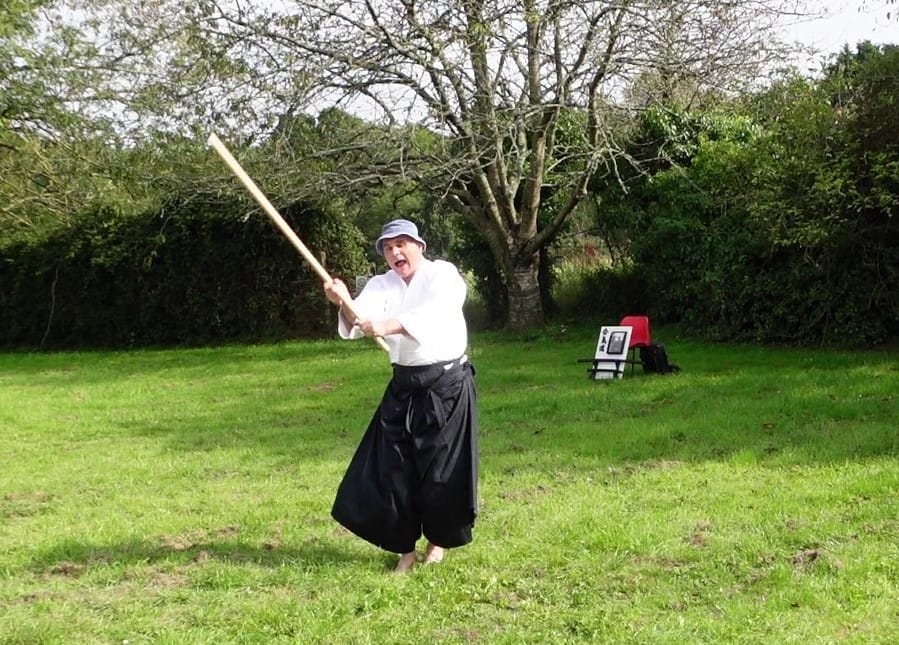
In the Aiki-jo movement called tsuki jodan gaeshi uchi, the jodan gaeshi time is not a protection time, it's an attack time...
An oversimplification that has led to the belief that everything in Aikido must be done in hanmi and that hanmi must be applied to everything.
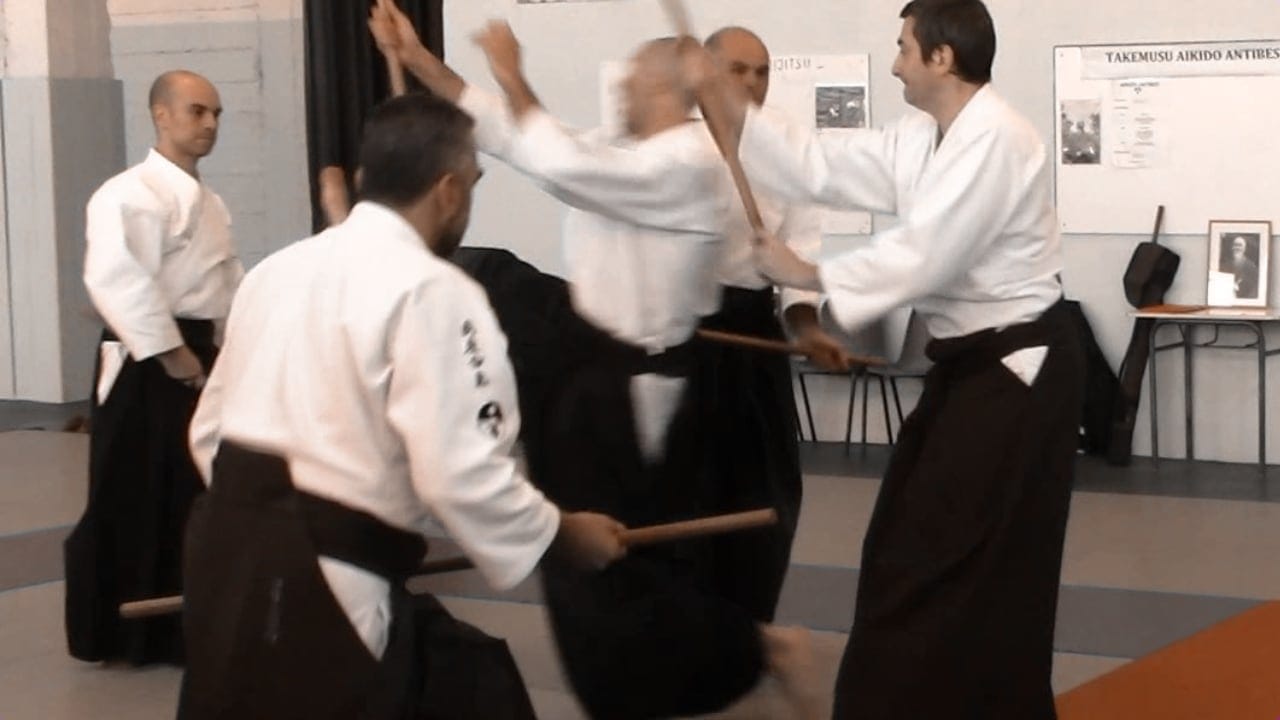
The 4 techniques that make up the linear exercise known as kumijo 7 do not change when applied in all four directions.