Members
Chapter IV – Training in Aiki #3
Aiki demonstrates the mysterious workings of the soul of sounds (kototama) – キ其業ハ言魂ノ妙用ラ示 – O Sensei Morihei Ueshiba – Budō

The unique book of the founder of Aikido, decrypted by Philippe Voarino from the original Japanese text.
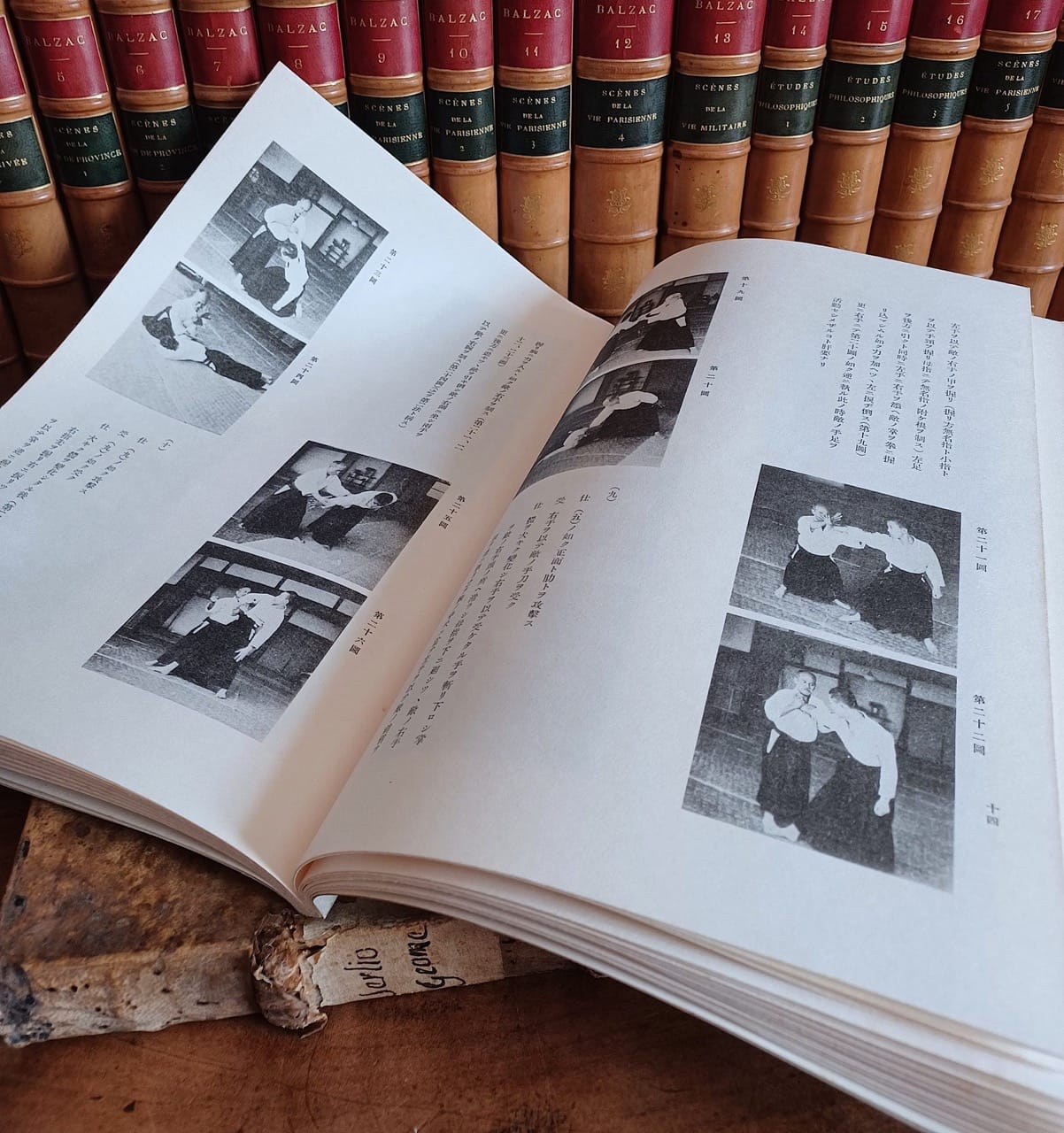
Aiki demonstrates the mysterious workings of the soul of sounds (kototama) – キ其業ハ言魂ノ妙用ラ示 – O Sensei Morihei Ueshiba – Budō
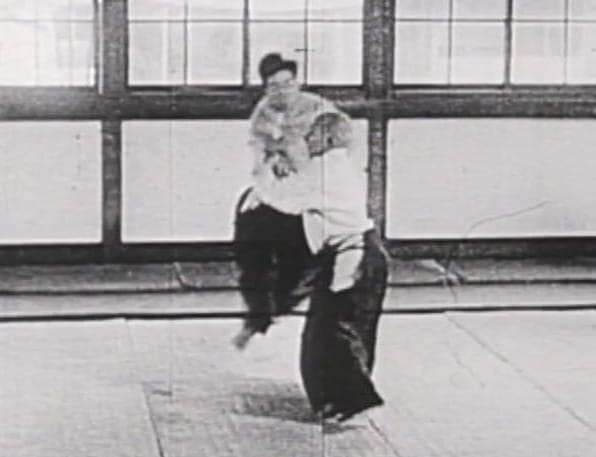
Point 18 of Budō reveals a major arcane of Aikido: the manifestation of Aiki is related to the ten-chi vertical action.
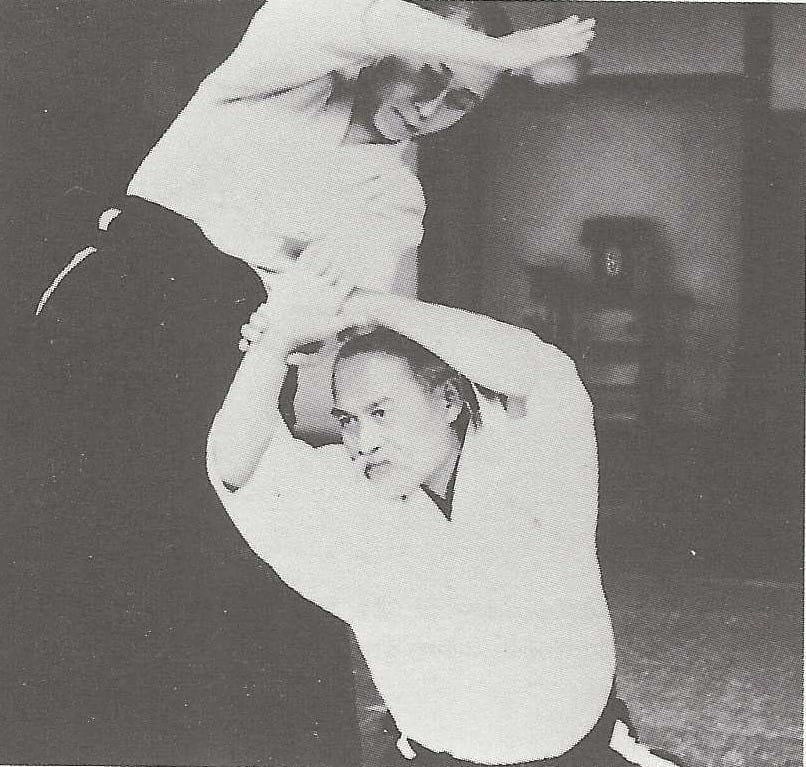
The action that raises uke towards the sky in the shiho nage movement, by blocking the three joints of his arm on a vertical axis for a fraction of a second, is the application of the ten-chi principle.
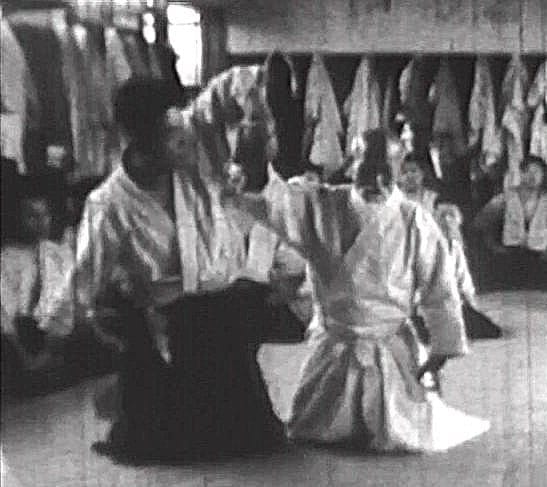
It is not the yonkyo immobilisation that is presented here, but the fourth law illustrated by the yonkyo immobilisation, which is why O Sensei is careful not to write immobilisation: 之ョ第四法ト稱ス
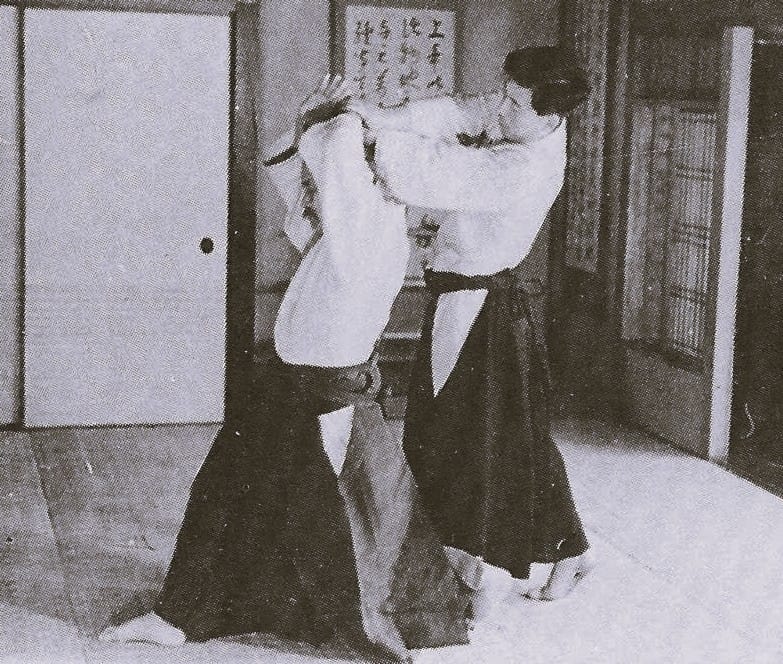
A rule seems to emerge which is this: for the irimi principle to be manifested, all Aiki techniques must be executed by moving in four square steps. This is the meaning of the ideogram 方 in 四方 (shiho), and shiho nage is simply an application that illustrates this general rule particularly well.
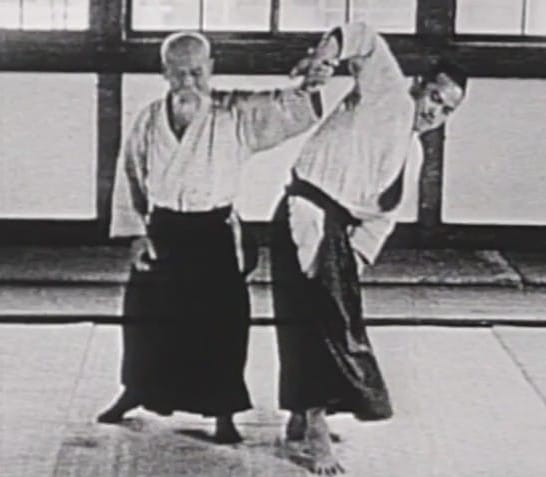
O Sensei does not write sankyo (三教), nor does he write third pin as it has been translated into English. Instead, he writes 之ラ第三法ト稱ス: this is called the Third Law.
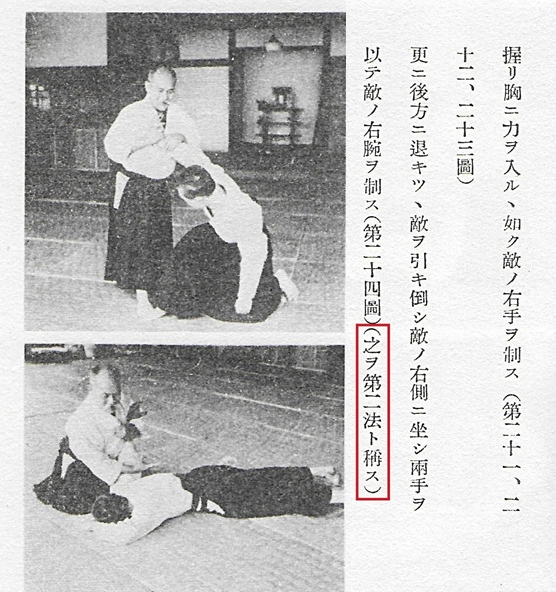
The four great laws of the Aiki system have been reduced, in modern Aikido, to the four fundamental immobilisations, which are only one particular aspect of the four laws.