Chapter III - The kajos in Budō #1
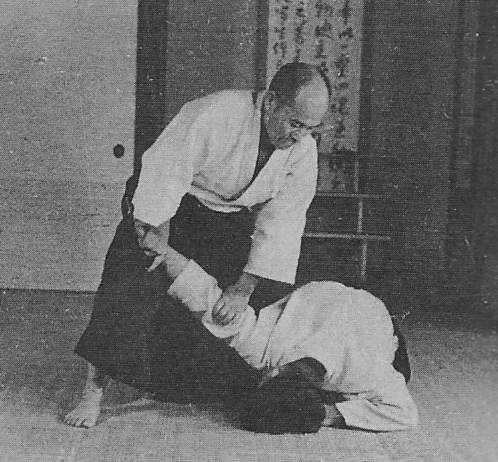
Aiki-do is a method of controlling a person using his arm. Ikkyo is at the beginning of Budō as the form that best illustrates this method.
There are four kajos because there are four possible combinations of the three joints in the human arm. There are no more than that, which is why O Sensei speaks of only four Laws in Budō.
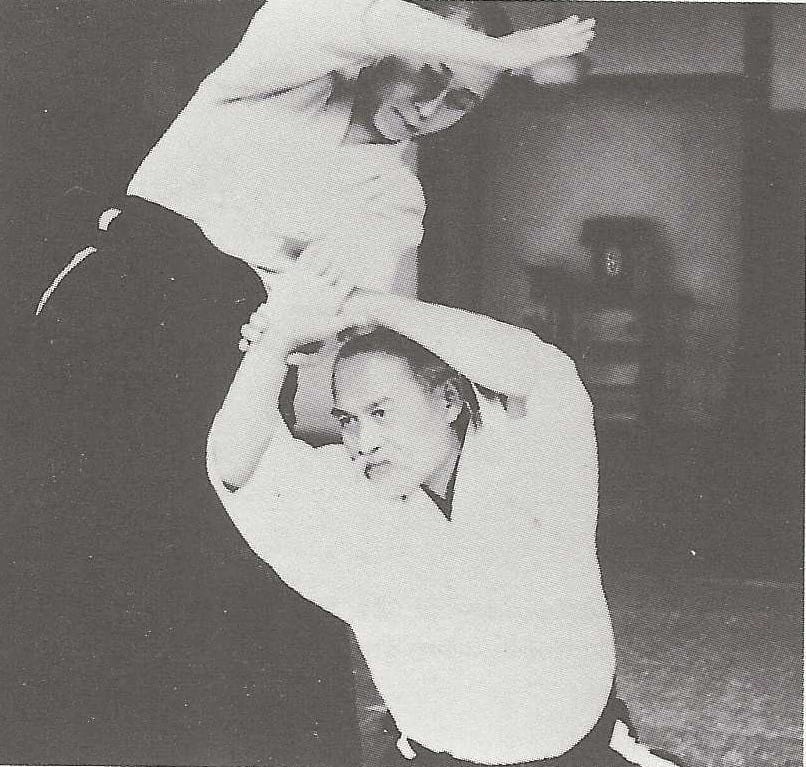
Yonkajo is the family that includes all techniques that act simultaneously on both the elbow and shoulder joints. Two movements form the core of this technique: yonkyo and tenchi nage.
The kajos are laws defining the links that bind the Aikido techniques together. These laws relate to the locking of the joints of the human arm.
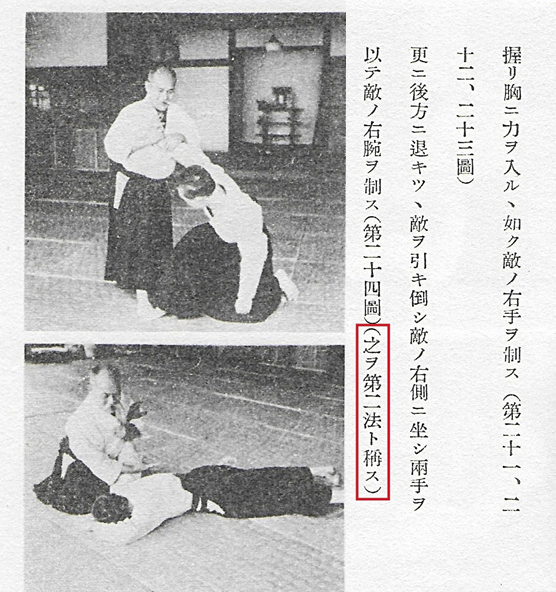
一法ヲ應用ス ‘Apply the first Law’. For O Sensei, gokyo was not the fifth immobilisation, it was the First Law....
O Sensei's intention to reveal the ability of reason to apprehend the mechanisms of the way was not identified in the English translation, which abusively converted a precise meaning into a general idea.
Kyo (教) has dethroned kajo (ケ条), techniques have taken the place normally occupied by laws.