It has already been explained that the ten-chi principle is not only present in the tenchi nage technique, but is in fact present in every Aikido technique.
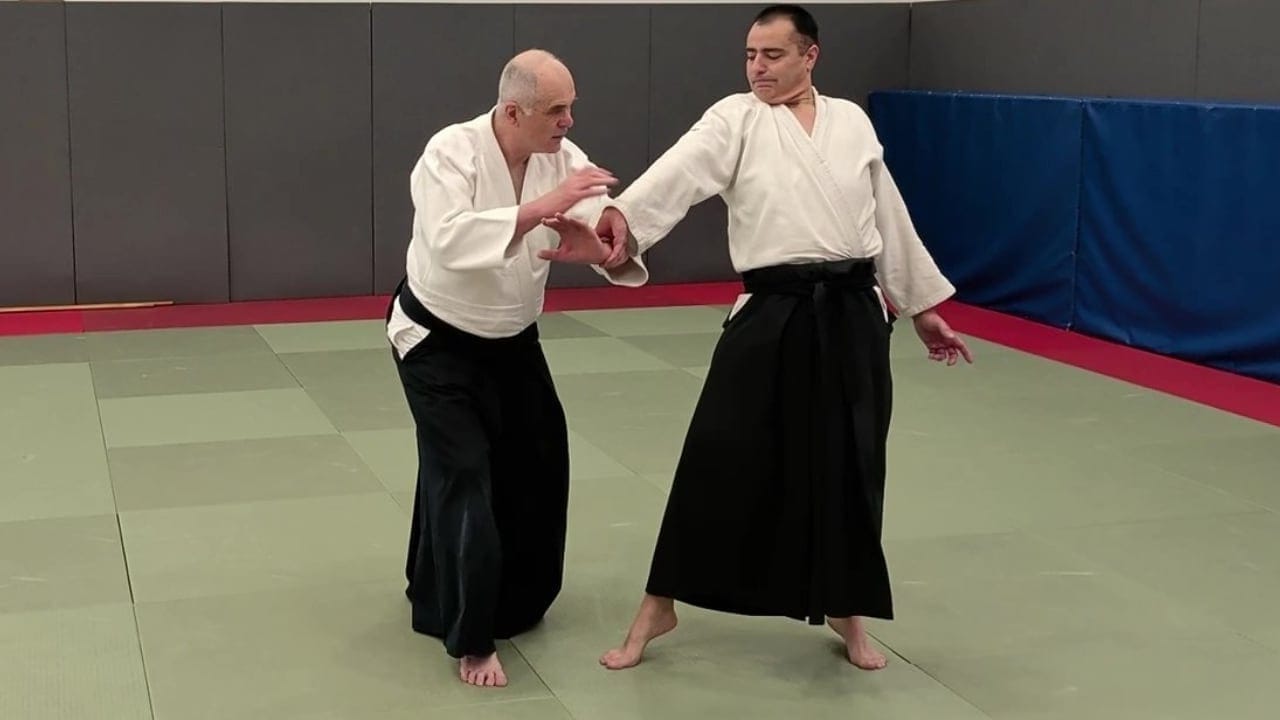
It is therefore not surprising to find it in the shiho nage technique, as shown in the video:
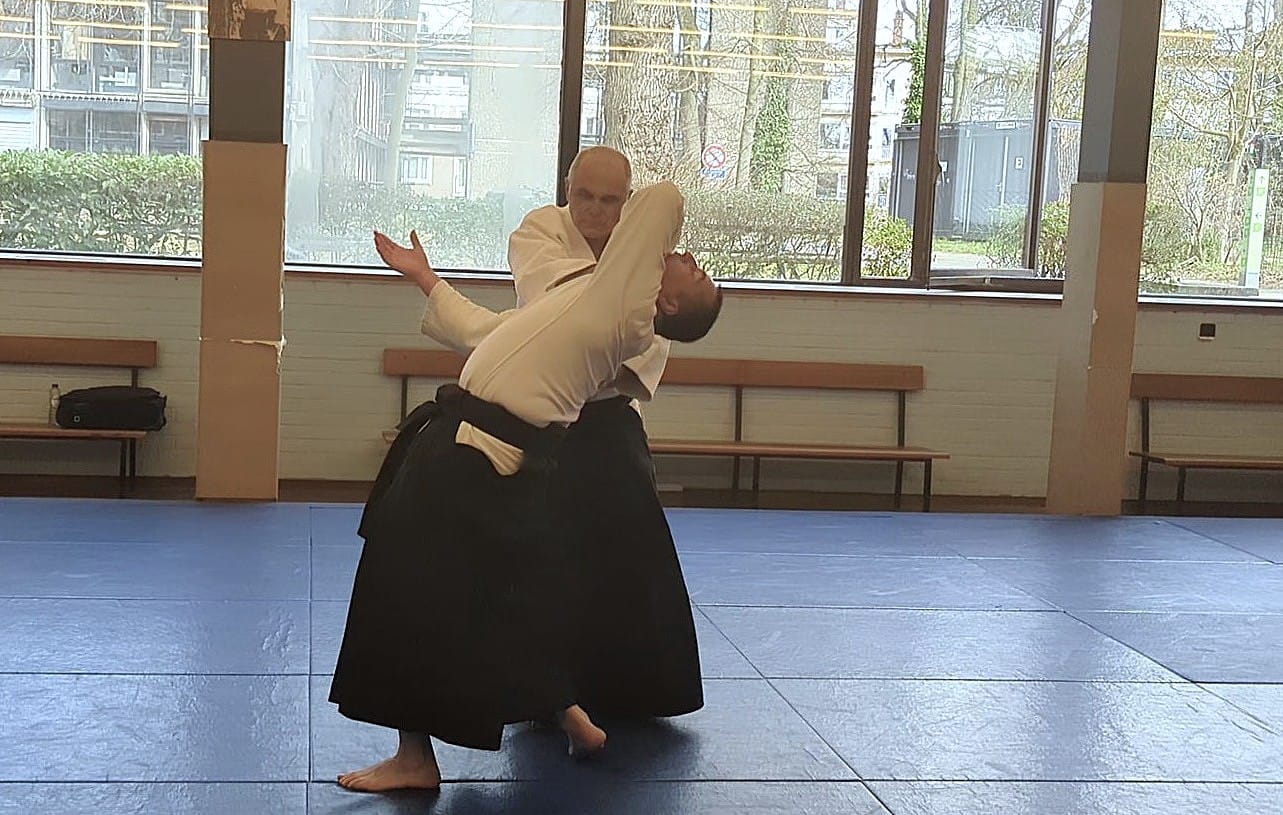
Every beginner quickly learns that the kaiten (rotation) of the shiho nage movement first rises towards the sky and then descends towards the earth in the final cut. One might think that this is enough to establish the ten-chi principle, but this is not the case. It is also necessary that in the ascending part of this spiral, uke is himself lifted off the ground, towards the sky, in order to descend more willingly towards the earth.
If the ascent towards the sky has no effect on uke, then the movement does not respect the ten-chi principle, and uke remains stable. This is what happens when one tries to pass under uke's arm without lifting him off his supports.
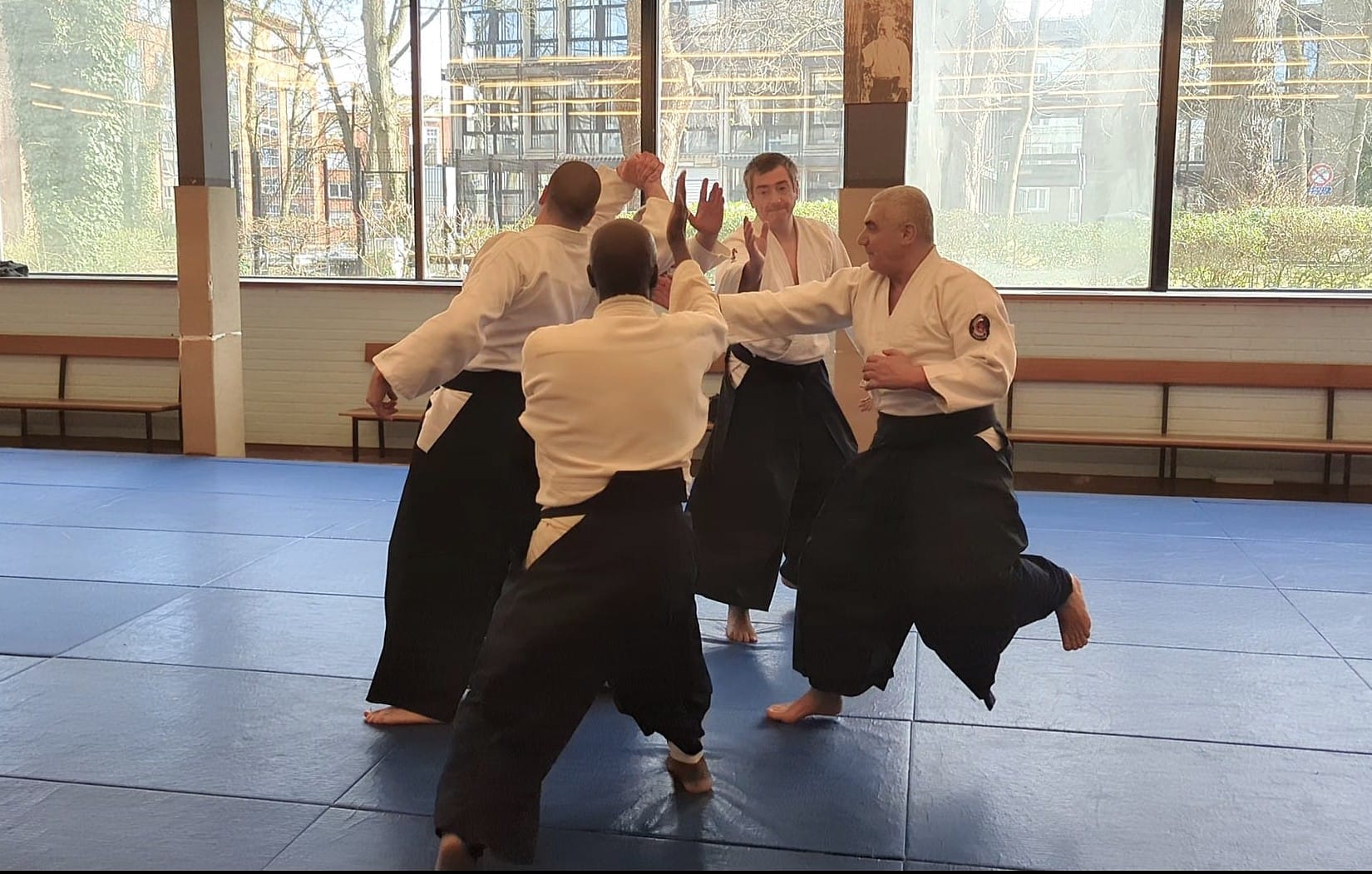
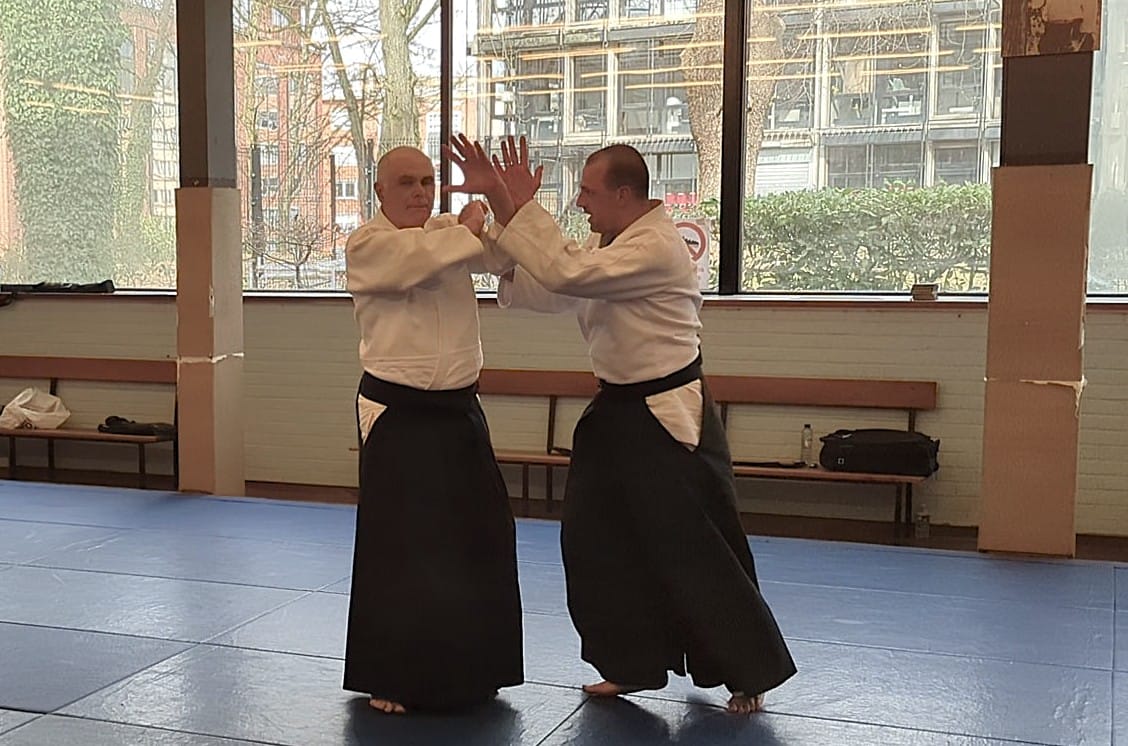
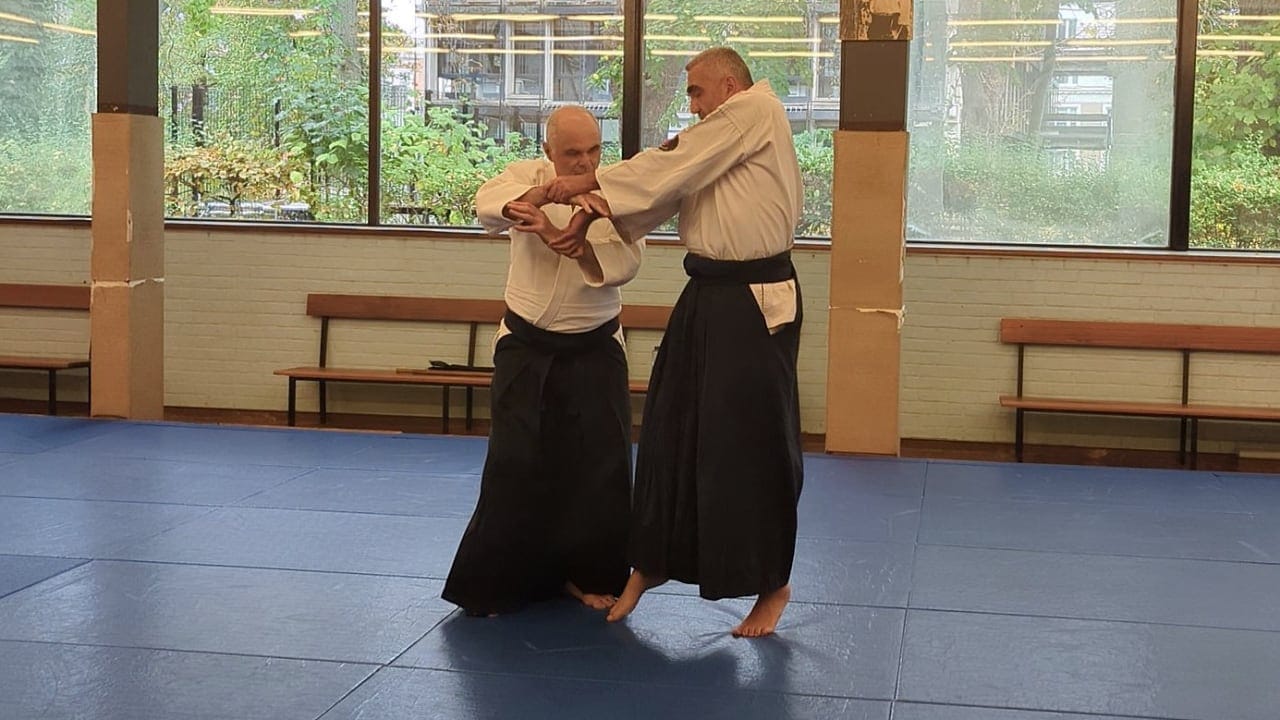
In this shiho nage movement, tori's two hands work in synergy in the rotation, in the characteristic form of kokyu ho, to raise uke's two shoulders. This action is performed in the movement; be careful not to confuse it with certain jujitsu techniques that teach blocking one of uke's arms before the movement. Aikido is movement; nothing is done while standing still.
It is essential to understand that the kokyu ho movement performed by the hands is a principle that is also present in all Aikido techniques; it is not exclusive to suwari waza kokyu ho. And if the suwari waza kokyu ho movement has been given this name, it is only because it illustrates this omnipresent principle particularly well, just as tenchi is also omnipresent and is not limited to the technique called tenchi nage.
Tenchi, kokyu, kaiten, kaeshi, and shiho are technical principles present in every Aikido technique. Every Aikido technique must respect all of them in order for the unique principle of irimi in Aikido to be a reality; otherwise, it is nothing more than a somewhat spectacular image obtained thanks to uke's cooperation.