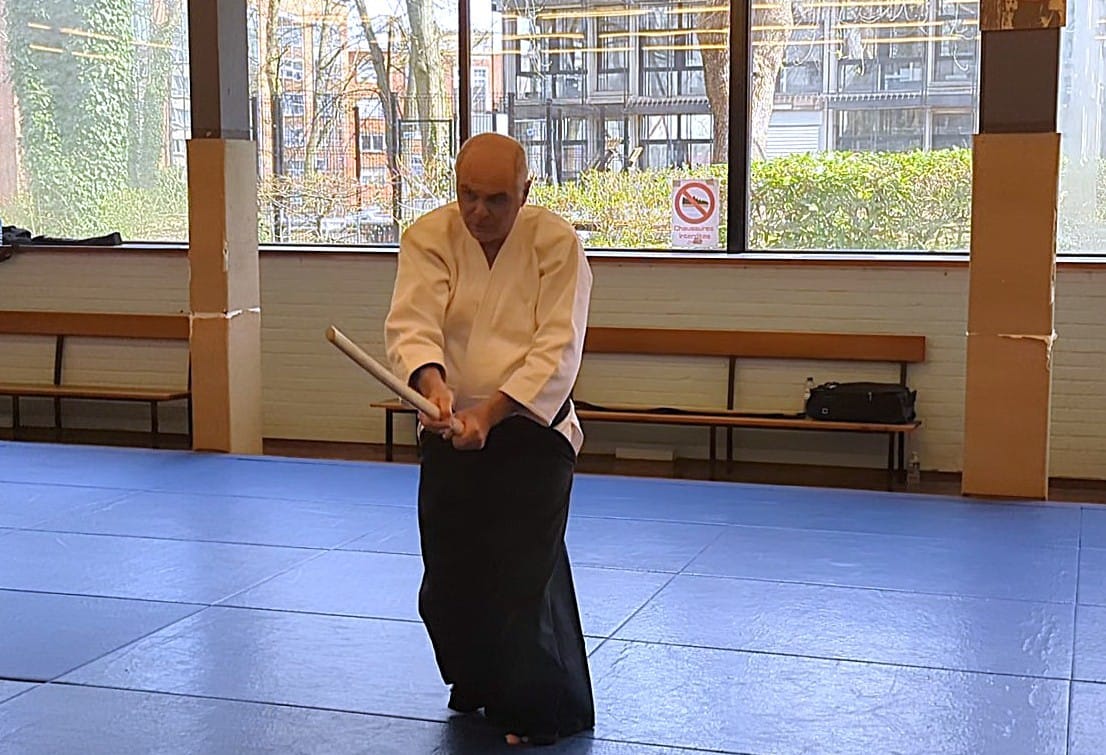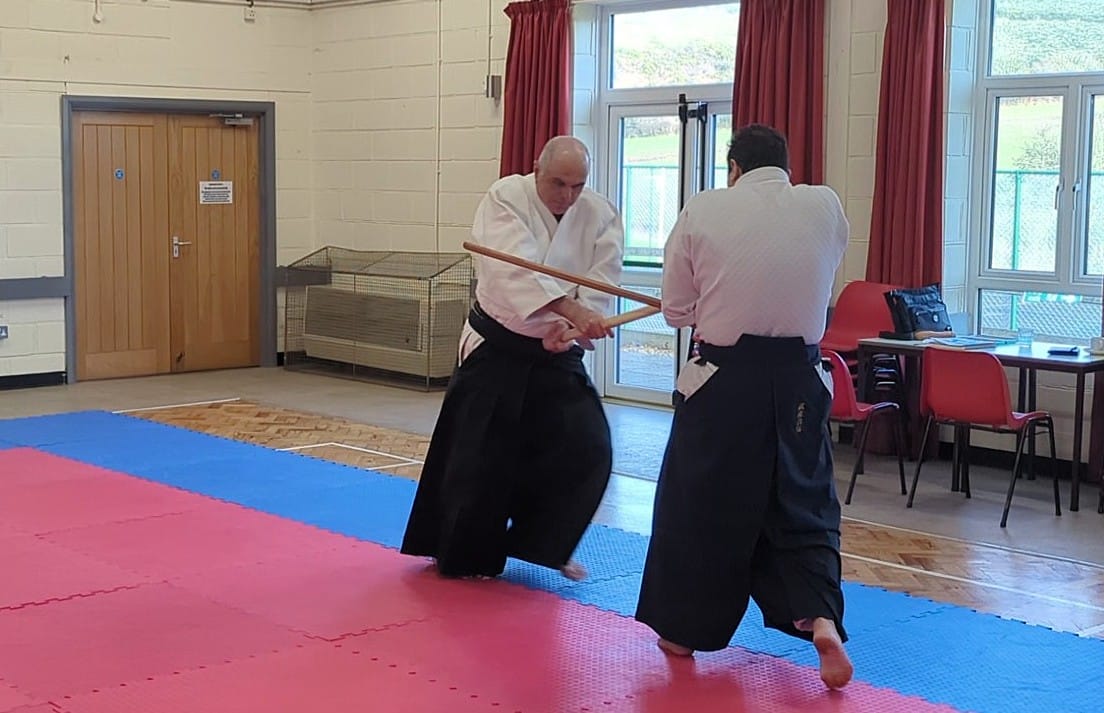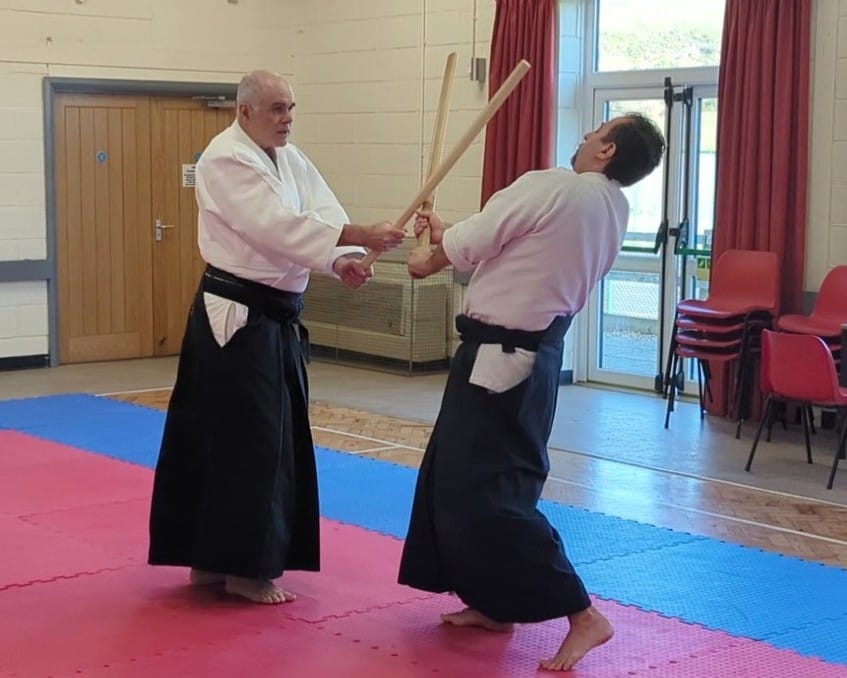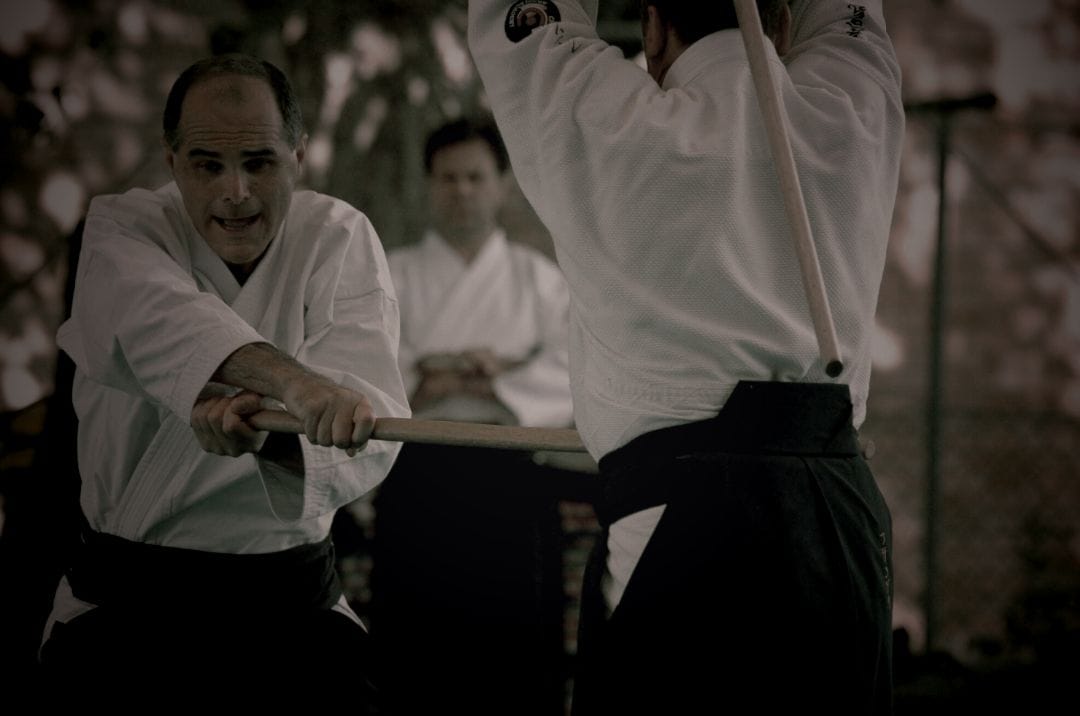
The ki musubi no tachi exercise is taught using a single line of attack.
In Morihiro Saito’s method, the four strikes are therefore performed four times in a row against the same attacker. This is how I learnt it directly from Master Saito during my years as an uchi deshi in Iwama.
Performed in this way, this exercise is a study. This study is excellent, it is invaluable, but it has no martial reality. That is not its purpose; its objective at this stage is the learning of the form and the blending (awase).
The Japanese sword reflects the cultural concept of ichi go ichi e (一期一会), one aspect of which is that every strike must be decisive. One does not strike the same opponent four times in succession.
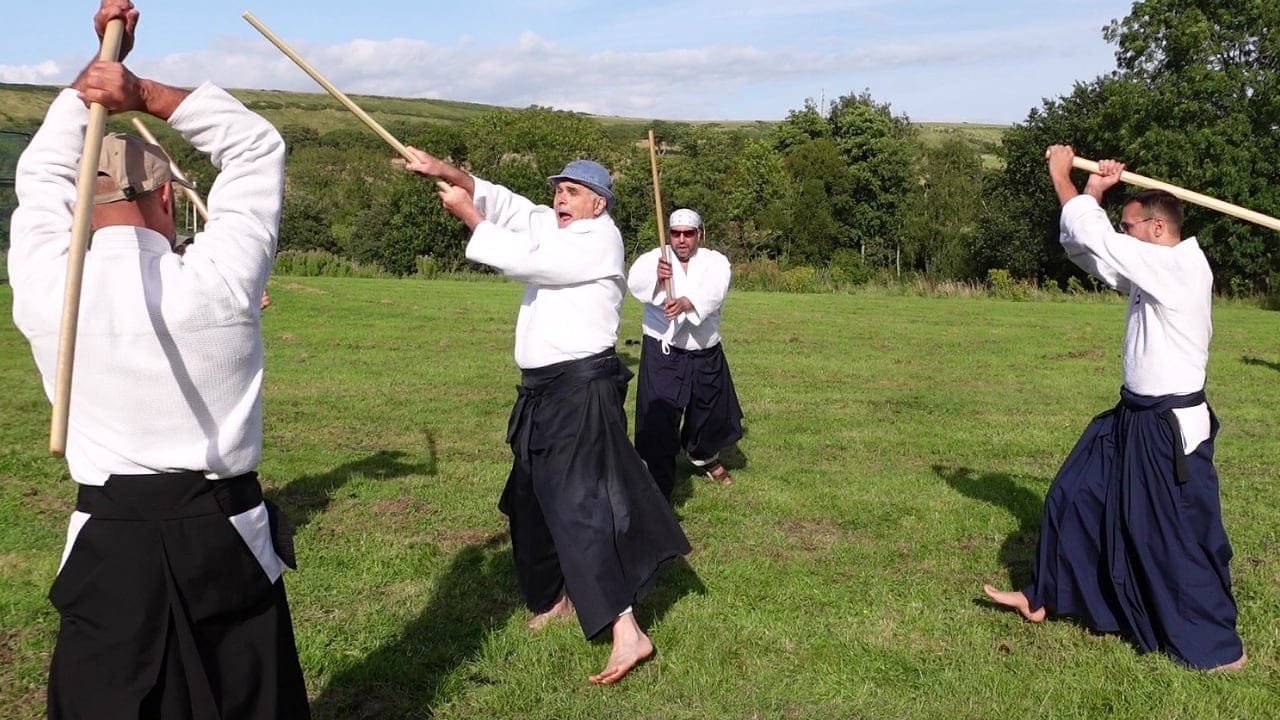
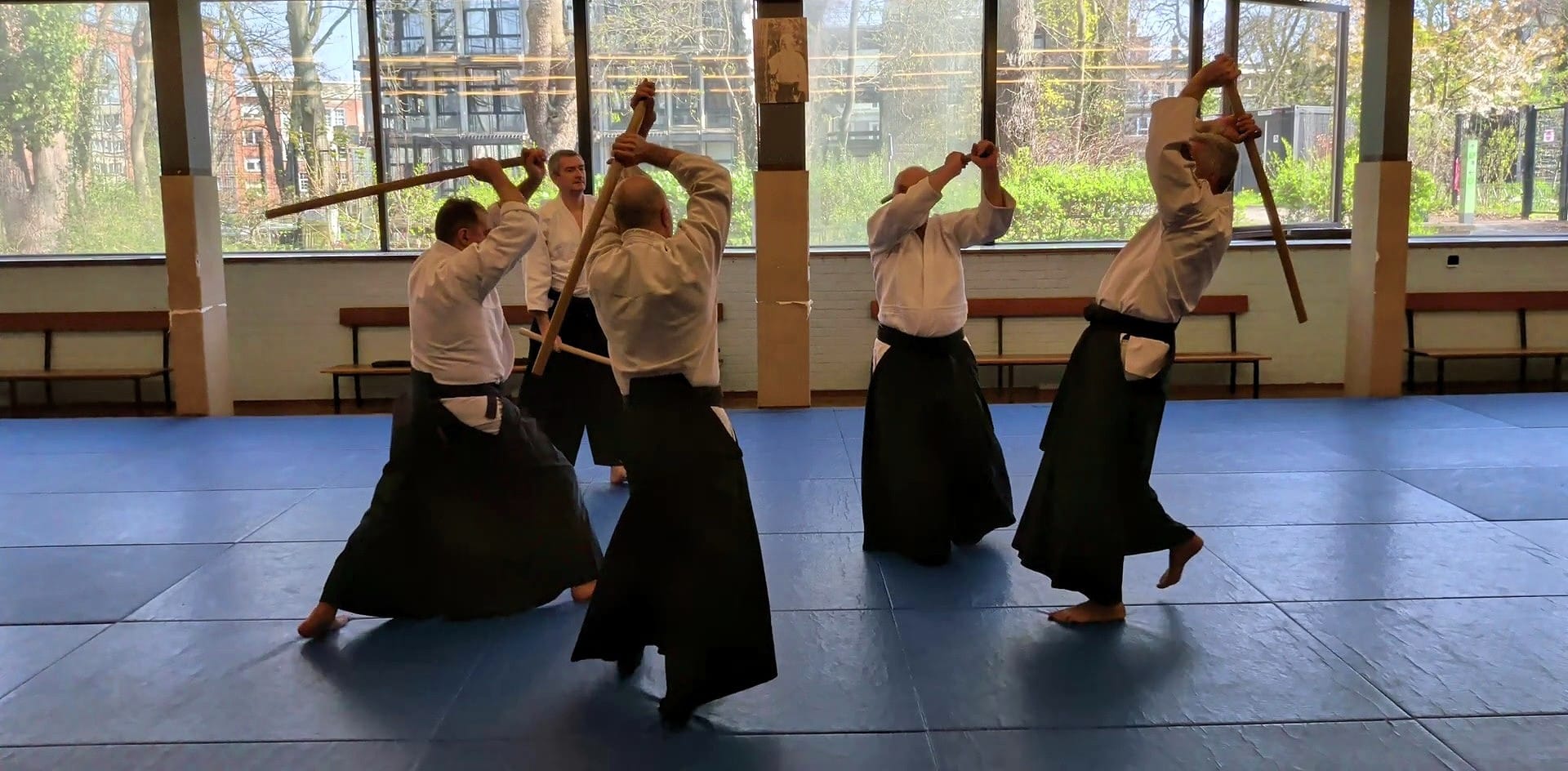
To approach the martial meaning of the ki musubi no tachi exercise, it is therefore necessary to match each strike to a different opponent. Four opponents must attack together. It is indeed important that the attacks are simultaneous; only in this way can the six directions roppo (六方) of Aikido displacement be learned :
If there were three strikes in the study exercise, three opponents would be used in the martial application exercise; if there were five strikes, five opponents would be used. It is as simple as that.
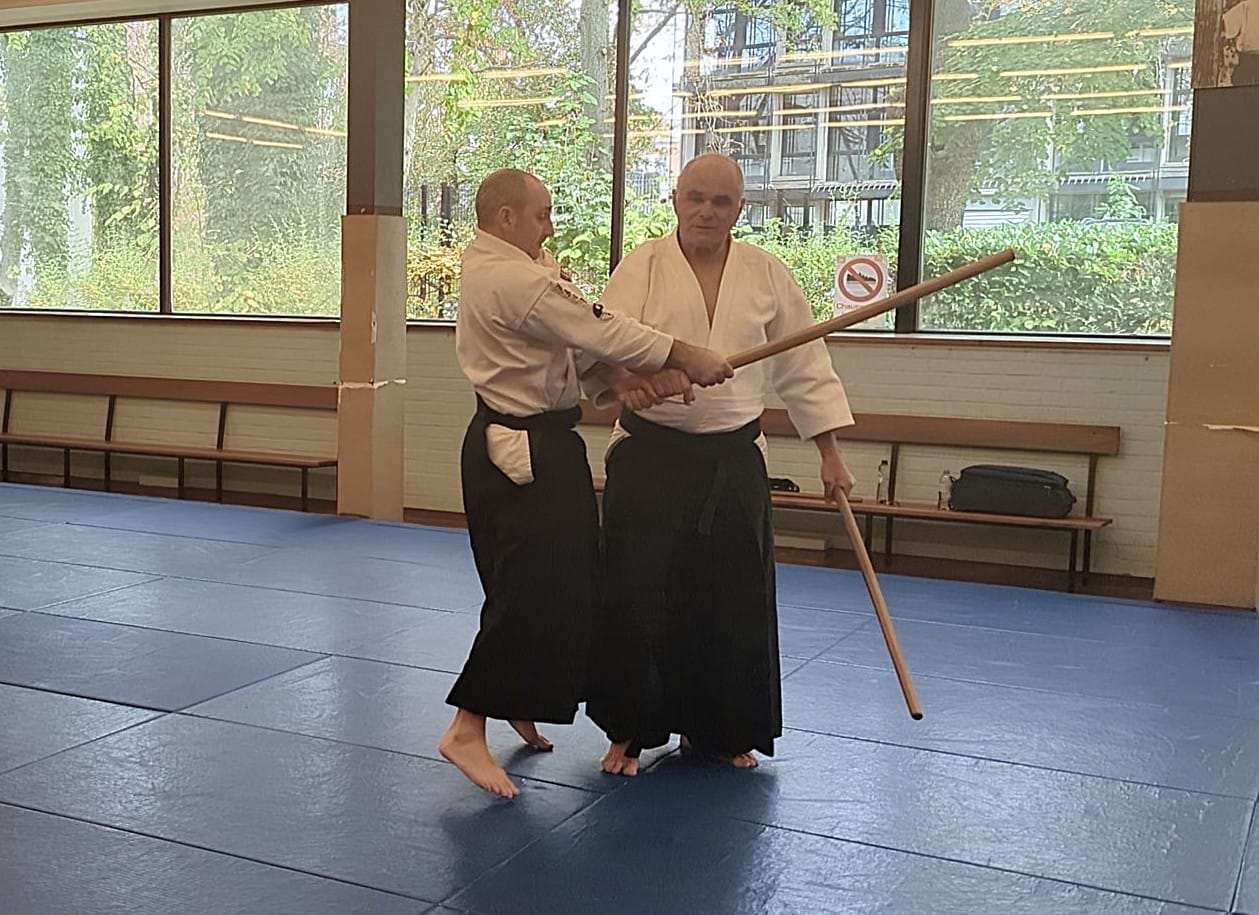
Note – We now understand the purpose of controlling the uchi tachi’s sword just before the final strike: it is not a matter of controlling the sword of the opponent (3) whom you have just beheaded, which obviously makes no sense, but of the last opponent (4) who is still free to attack.
The ken linear study exercise was designed by Morihiro Saito so that it could be broken down into different directions without altering the initial technical sequence in any way. The contraction of reality that he carried out for the purposes of his method is remarkable; it preserves all the elements of that reality along a purely artificial line. Master Saito wanted his work to be understood; instructors who merely repeat the linear exercise throughout their lives have failed to grasp the deeper reason behind this exercise.